
Why Did My Cake Crack on Top? 7 Causes and Fixes
Why did my cake crack on top? Almost always, the oven was too hot or the tin was too high, so the crust set before the centre finished rising. Here are the 7 causes and the exact fixes for a flat-topped sponge.

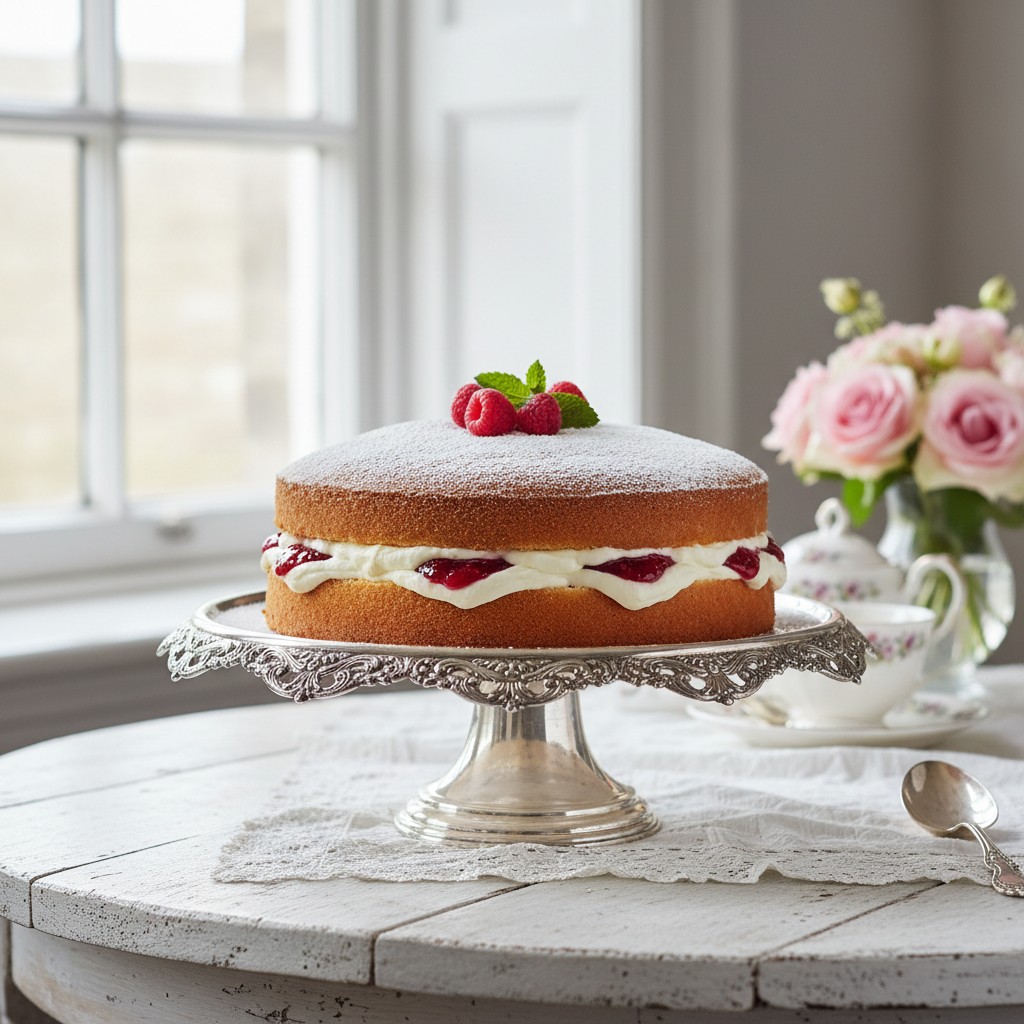
Quick Answer: Why Did My Cake Crack on Top?
A cake cracks on top when the surface sets into a crust before the centre has finished rising — the rising middle pushes through and splits it. The usual causes are an oven that is too hot, the tin on the wrong shelf, too much raising agent, a tin that is too small or overfilled, over-mixing, a batter that is too thick, or a fan oven used without the 20°C reduction. Bake on the middle shelf, measure raising agents level, fill tins two-thirds full and knock 20°C off for a fan oven.
The Short Answer: The Crust Set Before the Centre Finished Rising
If you have ever opened the oven to find your sponge split down the middle like a fault line, you are not alone. Wondering why did my cake crack on top is one of the most common questions in home baking — and the answer is almost always the same: the outside of the cake set before the inside had finished rising.
Here is what happens. In a hot oven, the top of the cake bakes first and forms a firm crust, while the centre is still rising, pushed upwards by steam and the raising agent. With nowhere else to go, the still-rising middle pushes straight through the set crust — and the surface splits open. The crack is harmless and the cake underneath is usually perfectly edible, but it is a clear sign something in the bake was slightly out of balance.
The good news is that a cracked top is one of the easiest baking faults to fix. In almost every case, the cause is one of seven things: the oven was too hot, the tin was on the wrong shelf, too much raising agent went in, the tin was too small or overfilled, the batter was over-mixed, the batter was too thick, or a fan oven was used without adjusting the temperature. Work through them and your next sponge will come out flat-topped.
1. The Oven Was Too Hot
An oven that runs too hot is the single most common reason a cake cracks on top — and it is exactly the cause Mary Berry herself names. When the heat is too fierce, the surface bakes and sets into a crust within the first few minutes, long before the centre has finished rising. The rising middle then breaks through the crust, and you get a crack, often with a dome to match.
The tricky part is that many domestic ovens run hotter than the dial says. A thermostat set to 180°C can easily be delivering 195°C or 200°C, especially in an older oven. That is why a cake can crack even when you followed the recipe to the letter.
- The Golden Fix: Check your oven with a cheap freestanding oven thermometer on the middle shelf — it is the single best investment a home baker can make. If the oven runs hot, turn the dial down until the thermometer reads true. If the thermometer reads correctly and the cake still cracks, try baking 10°C lower than the recipe states next time; a slightly longer, gentler bake gives a much flatter top. If you are converting between oven types, our Oven Temperature Converter takes the guesswork out of Celsius, Fahrenheit, fan and gas mark.
2. The Tin Was on the Wrong Shelf
Even at the right temperature, a cake baked too high in the oven will crack. The top shelf sits closest to the top heating element, so the surface of the cake gets blasted with direct heat and sets far too quickly — while the centre is still cool and rising. Gas ovens are particularly unforgiving here, because the heat rises and pools at the top of the cavity.
A cracked top almost always points upwards: the tin was too close to the heat source.
- The Golden Fix: Always bake cakes on the middle shelf, with space around the tin for air to circulate freely. If your oven only has two shelf positions, use the lower-middle one for a deep cake and the upper-middle one for a shallow sponge. Never bake a cake on the very top shelf, and never push the tin right up against the back wall, where the heat is most intense.
3. Too Much Baking Powder or Raising Agent
It feels logical — a little extra baking powder should mean a taller, lighter cake. In practice, the opposite happens. Too much raising agent makes the cake rise too fast and too far, far quicker than the crumb can set around it. The oversized rise pushes through the surface and splits it open, and the cake may even spill over the sides of the tin. It is the same fault that makes cakes sink once they cool — see our guide on why cakes sink in the middle.
The usual culprit is a heaped spoon instead of a level one, or adding baking powder to self-raising flour when the recipe did not ask for it. Self-raising flour already contains its raising agent, so extra powder on top is almost always too much.
- The Golden Fix: Measure raising agents with level measuring spoons, never a heaped teaspoon from the cutlery drawer. As a rule of thumb, a sponge needs about 1 teaspoon of baking powder per 100g of plain flour — and if you are using self-raising flour, do not add more unless the recipe explicitly says so. If you are converting between flours, our self-raising vs plain flour guide gives the exact ratios.
4. The Tin Was Too Small or Overfilled
If the tin is too small for the amount of batter, the cake has nowhere to go but up. The batter rises higher than the tin can contain, domes steeply in the centre, and the stretched surface cracks as it bakes. Overfilling has the same effect even in the right tin: a tin filled to the brim leaves no headroom for the rise.
This is a particular trap with loaf cakes, where a recipe written for a 2lb tin gets squeezed into a 1lb one.
- The Golden Fix: Fill cake tins no more than two-thirds full, and always use the tin size the recipe specifies. If you are unsure which tin a recipe needs, check our 1lb vs 2lb loaf tin size guide for exact dimensions and capacities. If you only have a smaller tin, bake the extra batter as cupcakes rather than overfilling.
5. The Batter Was Over-Mixed
Beating a cake mixture for too long is another reliable way to crack the top. Over-mixing whips too much air into the batter and develops the gluten in the flour, making the mixture thick and elastic. In the oven, all that trapped air expands rapidly, the cake shoots up fast — and the surface, which cannot stretch to match, splits.
This is most common with a stand mixer left running too long, or with the all-in-one method beaten well past the point where the ingredients have combined. Mary Berry's rule for her all-in-one cakes is to mix for just 1 to 2 minutes, until the batter is smooth and glossy — no longer.
- The Golden Fix: Once the flour goes in, mix only until it disappears. With an electric mixer, use the lowest speed and stop the moment the batter looks smooth. A few small lumps are far less of a problem than an over-beaten batter.
6. The Batter Was Too Thick or Too Dry
A batter that is too thick and stiff cannot rise evenly. Too much flour, or too little liquid — milk, eggs or melted butter — leaves a heavy mixture that sets in a rigid dome rather than spreading and rising gently. As the centre pushes up through that stiff crust, the surface cracks, and the finished cake is usually dense and heavy as well.
The usual cause is a measuring slip: flour scooped straight from the bag with a cup packs down and weighs far more than flour spooned lightly in, and a recipe followed with a mug instead of scales can easily end up heavy on flour.
- The Golden Fix: Weigh your flour on kitchen scales rather than measuring by volume — it is the single biggest accuracy upgrade in baking. And if a batter looks stiff and reluctant to fall from the spoon, add a tablespoon of milk before it goes in the tin. The batter should drop softly from the spoon, not sit in a rigid peak.
7. The Fan Oven Wasn't Adjusted (Reduce by 20°C)
Fan ovens are the quiet cause of many cracked cakes in British kitchens, because most recipes are written for a conventional oven. A fan oven circulates hot air so efficiently that it bakes about 20°C hotter than the same setting on a conventional oven — so a sponge baked at 180°C fan is really baking at the equivalent of 200°C conventional. The top sets early, the middle keeps rising, and the cake cracks.
The fix is simple and standard: when a recipe gives a conventional temperature, reduce it by 20°C for a fan oven. So 180°C conventional becomes 160°C fan, and 170°C conventional becomes 150°C fan. Gas mark stays the same in either case.
- The Golden Fix: Always knock 20°C off a conventional temperature when baking in a fan oven, and check the cake 5 minutes earlier than the recipe says. If your recipe already gives a fan temperature, use it as written — do not reduce it twice. Our Oven Temperature Converter converts between conventional, fan, Fahrenheit and gas mark in one click.
How to Fix a Cracked Cake (4 Easy Rescues)
A cracked cake is still a good cake — the crack is a surface fault, not a flavour fault. Try one of these rescues:
- Level it off: Once the cake is completely cool, run a long serrated bread knife across the top to slice the dome and crack away. Turn the sponge upside down so the flat base becomes the top — it is already perfectly level.
- Fill the crack: Spread buttercream, ganache or lemon curd generously over the top, working it right into the crack with a palette knife. Nobody will ever know it was there, and the filling adds moisture.
- Cover it completely: A cracked sponge is the perfect candidate for a crumb coat and a full layer of buttercream or fondant. The crack disappears under the icing, and the cake looks deliberate.
- Turn it into something else: Slice a badly cracked sponge into cubes for a trifle, or crumble it with a little frosting to make cake pops.
Mary Berry's 7 Rules for a Flat-Topped Cake
Preventing a cracked top comes down to a short checklist — run through it before every bake:
- Bake at the right temperature — and verify it. Use an oven thermometer to check your oven tells the truth, and drop the temperature by 10°C if cracks keep appearing.
- Use the middle shelf. Keep the tin away from the top element, with air circulating all round it.
- Measure the raising agent level, not heaped. Never add baking powder to self-raising flour unless the recipe asks.
- Fill tins two-thirds full, in the size the recipe states. Bake spare batter as cupcakes.
- Mix gently once the flour is in. Stop as soon as the batter is smooth.
- Knock 20°C off for a fan oven. And check the cake 5 minutes early.
- Weigh your flour. A stiff, dry batter cracks — a soft, dropping batter bakes flat.
Get those seven right and your cakes will come out of the oven flat-topped and ready to ice — no levelling knife required.
✨ Mary Berry's Rule for Crack-Free Cakes
"A cracked top usually means the oven was a little too hot, or the tin was sitting too high. Bake on the middle shelf, check your oven with a thermometer, and remember — a crack never affects the taste. A little buttercream hides a multitude of sins."
Frequently Asked Questions
Why did my cake crack on top?
A crack on top of a cake is almost always caused by the oven being too hot, or the tin sitting too high in the oven. The surface sets into a crust before the centre has finished rising, and the rising middle pushes through and splits it. Check your oven with a thermometer, bake on the middle shelf and try 10°C lower next time.
Is a cracked cake still safe to eat?
Yes — a crack is purely cosmetic and does not affect the taste or texture underneath. Once the cake is cool, level the dome off with a serrated knife, fill the crack with buttercream or ganache, or turn the sponge upside down so the flat base becomes the top.
How do I stop my cake from doming and cracking?
Make a small dip in the centre of the batter with the back of a spoon before it goes in the oven — the dip fills in as the cake rises and the top bakes flatter. Combined with the right temperature, the middle shelf and a tin filled no more than two-thirds full, it is the simplest trick for a level sponge.
Charlotte Davies
Lead Culinary Editor & British Baking Specialist
Passionate British baker and food writer specialising in traditional British home baking, foolproof kitchen science, and Mary Berry-inspired recipes.
More Helpful Baking Guides
 Baking Tips & Science
Can You Freeze Cake? How to Freeze, Defrost and Store Any Cake
Yes, you can freeze cake — sponge for up to 3 months, fruit cake for up to 6. Here is how to wrap it, which cakes freeze best, how to defrost it properly, and the mistakes that ruin a frozen cake.
 Baking Tips & Science
How to Fix Grainy or Split Buttercream in Under 2 Minutes (Foolproof Guide)
You spend time beating butter and icing sugar for a celebration cake, but instead of a silky, pipeable cloud of frosting, your buttercream feels gritty on the tongue or separates into a curdled mess. Here is why buttercream turns grainy and how to rescue it in under two minutes with simple kitchen science.