
Buttermilk Substitute UK: 5 Easy Swaps That Actually Work
Halfway through a scone recipe and there's no buttermilk in the fridge? Here is the honest answer to the buttermilk substitute UK question: five swaps that actually work, with the exact ratios for each, and which one to reach for depending on what you're baking.

The Short Answer
The best buttermilk substitute in the UK is milk soured with lemon juice or white vinegar: stir 1 tablespoon (15 ml) of acid into a measuring jug, top it up with milk to 240 ml, stir once and leave it for 5 to 10 minutes until it looks slightly curdled. Use it cup for cup in place of buttermilk. Yoghurt, soured cream and kefir work too — the ratios for all five swaps are below.
The Short Answer: Milk, Lemon Juice and 5 Minutes
Yes — you can make a buttermilk substitute in the UK in five minutes, with things already in your fridge. Buttermilk is hard to find here: most large supermarkets stock a carton in the milk aisle, but smaller shops often don't carry it at all.
The swap that works best is soured milk: 1 tablespoon of lemon juice or white vinegar, topped up with milk to 240 ml (1 cup), left to stand for 5 to 10 minutes. Use it in the same amount as the buttermilk in your recipe.
All five swaps at a glance, each replacing 240 ml (1 cup) of buttermilk:
- Milk + lemon juice or white vinegar: 1 tbsp acid + milk to 240 ml; rest 5–10 minutes. Best all-rounder.
- Plain yoghurt: 180 ml yoghurt + 60 ml milk, whisked smooth. Best for cakes and muffins.
- Soured cream: 180 ml soured cream + 60 ml milk, whisked smooth. Richest result.
- Kefir: 240 ml plain kefir, straight from the bottle. Closest in flavour.
- Buttermilk powder: Follow the packet (about 4 tbsp powder + 240 ml water). Best for regular use.
What Buttermilk Actually Does in Baking
A substitute only works if it does the same jobs as the real thing, and buttermilk does three jobs at once.
- It is an acid. Real buttermilk is cultured milk — friendly bacteria have turned some of its milk sugar into lactic acid. That acid is the trigger for bicarbonate of soda: the two react and release carbon dioxide, which lifts the batter. Our guide to bicarbonate of soda vs baking powder explains the chemistry — but the practical point is simple: without acid, the soda stays unreacted and the bake stays flat.
- It tenderises. Acid weakens gluten, which is why buttermilk bakes come out soft and tender rather than tough — the reason it is prized in scones, soda bread and pancakes.
- It adds flavour. Real buttermilk has a gentle cultured tang that plain milk does not. Soured milk replaces the acid and the liquid perfectly, but it cannot fake that cultured flavour. In a strongly flavoured bake you will never notice; in a plain scone or a buttermilk dressing, you might.
Swap 1: Milk + Lemon Juice or White Vinegar (The Best All-Rounder)
This is the swap to use when you want the closest match to real buttermilk with the least fuss, and it is the one we reach for most often. It works in scones, soda bread, pancakes, cakes and muffins — anywhere the buttermilk is being baked.
For 240 ml (1 cup) of buttermilk:
1. Measure 1 tablespoon (15 ml) of lemon juice or distilled white vinegar into a measuring jug. 2. Pour in milk until the liquid reaches the 240 ml line. Do not add a full 240 ml of milk on top of the acid — the acid is part of the total. 3. Stir once and leave it for 5 to 10 minutes at room temperature. It will thicken slightly and may look a little curdled — that is the acid working. 4. Use it straight away, cup for cup, in place of buttermilk.
Whole milk gives the best body, but semi-skimmed works fine — the acid does the heavy lifting, not the fat. Lemon juice and white vinegar are interchangeable, as the vinegar flavour bakes out completely. Do not use malt vinegar or balsamic — their flavour and colour will show.
Scaling it: 1 tablespoon of acid per 240 ml, so for 150 ml of buttermilk use about 2 teaspoons of acid and top up with milk to 150 ml.
Swap 2: Plain Yoghurt Thinned with Milk
If you have a pot of plain yoghurt in the fridge, you already have a cultured dairy product — which makes this swap arguably the most honest of the lot. Yoghurt brings real lactic acid, so it fires bicarbonate of soda just as well as buttermilk does, and it brings a cultured tang that soured milk cannot.
For 240 ml (1 cup) of buttermilk: whisk 180 ml of plain yoghurt with 60 ml of milk until smooth and pourable. Use full-fat natural yoghurt if you have it, but low-fat works too. Don't use flavoured or sweetened yoghurt, and avoid Greek yoghurt unless you thin it further — it is much thicker than the yoghurt this ratio assumes.
This is our pick for cakes and muffins, where the extra body makes the crumb beautifully moist. Avoid it for soda bread, where the dough needs a thin, pourable liquid — stick with swap 1 or swap 4. And never swap unthinned yoghurt 1:1: it adds too little liquid and too much solid, which can leave a cake dry.
Swap 3: Soured Cream, Thinned
Soured cream is cultured just like buttermilk, so it brings the same acid and a similar tang — with considerably more fat. Thinned to the right consistency, it is a superb substitute, and in rich cakes it can actually improve on buttermilk.
For 240 ml (1 cup) of buttermilk: whisk 180 ml of soured cream with 60 ml of milk until it pours like single cream. Use it cup for cup.
This is the richest of the five swaps, so save it for bakes where richness is a virtue: chocolate cakes, coffee cakes, banana bread and muffins. The extra fat makes the crumb tender and keeps it moist for a day longer. It is a poor choice for soda bread or anything lean, and wasted in pancakes, where the cheaper soured-milk swap does the same job for pennies.
Swap 4: Kefir (The Closest Flavour Match)
Kefir is the swap most UK bakers haven't tried — and it is the closest thing to real buttermilk you can buy. Like buttermilk, it is a cultured milk drink: milk fermented with live cultures until it is tangy, slightly thick and pourable. Supermarkets now stock plain kefir in the yoghurt aisle.
Use it straight from the bottle, cup for cup — 240 ml of plain kefir replaces 240 ml of buttermilk with no measuring, no waiting and no thinning. The acid content is similar to buttermilk, so it activates bicarbonate of soda in the same way, and the flavour is the closest of all five swaps: genuinely cultured and tangy rather than just sour.
Kefir shines where buttermilk's flavour actually matters — scones, soda bread and pancakes — and it is the only substitute we would happily use in an uncooked recipe like a ranch-style dressing or a marinade, where soured milk would taste flat.
Swap 5: Buttermilk Powder — and Buying Real Buttermilk in the UK
If you bake with buttermilk regularly — weekly soda bread, a standing pancake habit — the smartest fix is to stop improvising and keep buttermilk powder in the cupboard. It is dried cultured buttermilk, and it keeps for months. Mix it with water according to the packet (usually about 4 tablespoons of powder to 240 ml of water) and use it cup for cup.
Buttermilk powder is rarely on supermarket shelves in the UK, but it is easy to find from online baking suppliers, where a tub lasts for dozens of bakes.
And if you would simply rather buy the real thing, it is not as elusive as it feels mid-recipe. Most large UK supermarkets stock buttermilk — look in the milk aisle, usually in a 568 ml carton near the cream. Real buttermilk also freezes well: freeze the rest of a carton in 240 ml portions.
Which Swap for Which Bake?
Any of the five will save a bake in a pinch, but matching the swap to the recipe is what turns a rescue into a result:
- Scones: Soured milk (swap 1) or kefir (swap 4). Both are thin and pourable, so the dough stays light. Our guide to why scones don't rise covers the rest: cold fat, a hot oven and a light hand. Try either swap in our Classic Light and Fluffy Scones.
- Soda bread: Soured milk or kefir. Here buttermilk is traditional rather than optional — the acid activates the bicarbonate of soda that lifts the loaf. Use our Classic Irish Soda Bread and don't overwork the dough.
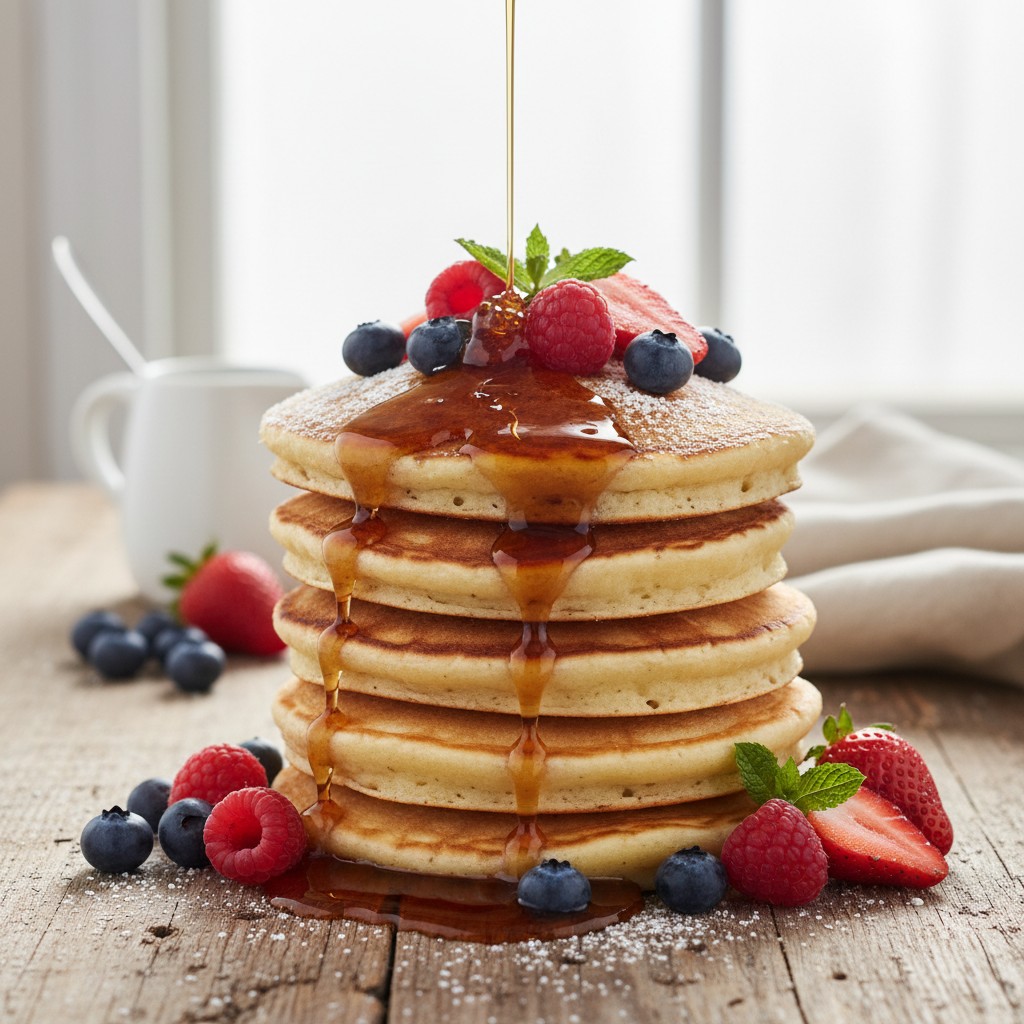
- Pancakes and drop scones: Soured milk — cheap, fast, and the tang is barely noticeable under syrup and butter. Try it in Mary's Fluffy Buttermilk Pancakes.
- Cakes and muffins: Yoghurt (swap 2) or soured cream (swap 3) for the moistest crumb; soured milk works perfectly well too.
- Chocolate cake and banana bread: Soured cream, for the extra richness.
- Dressings, marinades and dips (uncooked): Kefir only. Soured milk has the acid but none of the cultured flavour, and it will taste thin and sharp raw.
Whatever you are baking, the golden rule is the same: the substitute replaces the buttermilk only. Don't change anything else.
3 Mistakes That Ruin a Buttermilk Substitute
Most failed buttermilk swaps fail in one of three ways, and all three are easy to avoid:
- 1. Using plain milk with no acid. This is the single most common mistake. Plain milk is not a buttermilk substitute — it is just milk. Without the acid, bicarbonate of soda has nothing to react with, so the bake rises poorly and can taste faintly soapy from the unreacted soda. If your recipe contains bicarbonate of soda, the acid is the whole point of the swap.
- 2. Adding too much acid. More is not better. Doubling the lemon juice doesn't make the bake rise twice as much — it makes the batter over-acidic, which can give a metallic or sour taste and cause over-browning. Stick to 1 tablespoon per 240 ml — if the mixture looks only slightly curdled after 5 to 10 minutes, that is correct.
- 3. Using the swap where buttermilk's flavour is the point, uncooked. Soured milk is a baking stand-in, not a cultured product. In a cold dressing, a dip or a marinade, it tastes sharp and thin where real buttermilk (or kefir) tastes rounded and creamy. For anything uncooked, use kefir or real buttermilk.
✨ Mary Berry's Buttermilk Rule
"Buttermilk earns its place in soda bread and scones because its acid wakes up the bicarbonate of soda — so whatever you use instead must be acidic too. Plain milk won't do it; soured milk, yoghurt or kefir will."
Frequently Asked Questions
Can I use milk instead of buttermilk in scones?
Not plain milk on its own — scones made with plain milk miss the acid that helps them rise and tenderises the crumb. Sour the milk first: 1 tablespoon of lemon juice or white vinegar topped up with milk to 240 ml, rested for 5 to 10 minutes. That soured milk works beautifully in scones.
How much lemon juice do I add to milk to make buttermilk?
1 tablespoon (15 ml) of lemon juice per 240 ml (1 cup) of milk. Put the juice in a measuring jug first, then top up with milk to the 240 ml line. Stir once, rest 5 to 10 minutes until slightly curdled, and use it cup for cup.
Is soured milk the same as buttermilk?
Close, but not identical. Soured milk matches buttermilk's acidity and liquid, so it behaves the same way in baking — it activates bicarbonate of soda and tenderises the crumb. What it lacks is buttermilk's cultured flavour. In baked goods you won't notice the difference; in uncooked dressings or dips, use kefir or real buttermilk instead.
Charlotte Davies
Lead Culinary Editor & British Baking Specialist
Passionate British baker and food writer specialising in traditional British home baking, foolproof kitchen science, and Mary Berry-inspired recipes.
More Helpful Baking Guides
 Ingredient Substitutions
Caster Sugar vs Granulated Sugar: Does It Matter in Baking?
Caster sugar and granulated sugar are the same ingredient milled to different sizes — but that size changes how they dissolve, cream and measure. Here is when the difference matters, when it doesn't, and how to swap them gram for gram.
 Ingredient Substitutions
Can You Use Stork Instead of Butter in Cakes? The UK Baker's Swap Guide
Halfway through a sponge with only a tub of Stork in the fridge? Here is the honest answer to can you use Stork instead of butter in cakes: when the swap works beautifully, the block vs tub difference that actually matters, and the bakes where butter is still worth it.