Mary Berry Recipes
Classic Homemade Seville Orange Marmalade
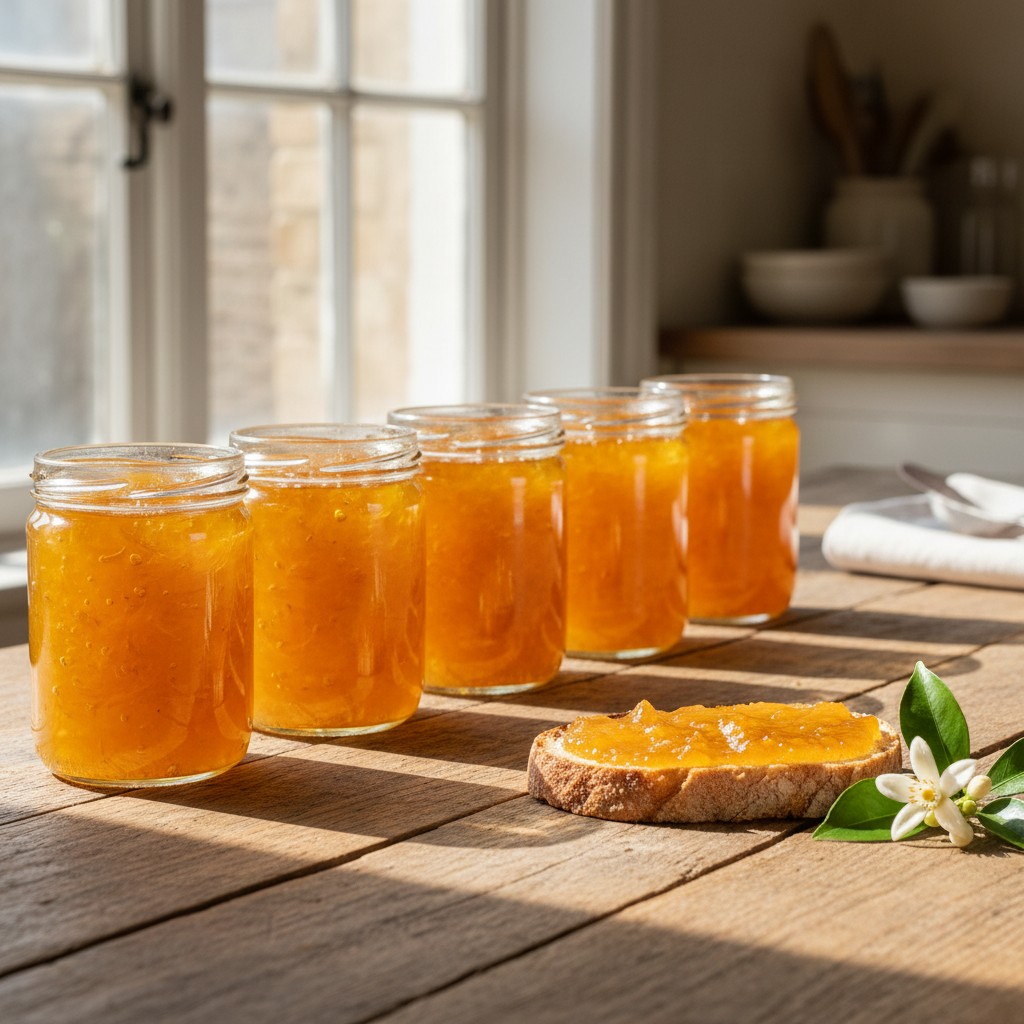
There's nothing quite like the vibrant tang of homemade marmalade to brighten a breakfast table. This classic Seville orange recipe is a true labour of love, promising sheer perfection in every jar.
Why You'll Love This Recipe
- Uses traditional Seville oranges for that authentic bittersweet flavour and high pectin content.
- Careful preparation of the peel ensures a lovely, tender texture throughout.
- Precise setting instructions guarantee a perfect, firm yet spreadable consistency.
- A rewarding kitchen project that yields delicious results for months to come.
- A truly economical way to enjoy seasonal fruit at its peak.
Ingredients
- 1 kg (2.2 lbs) Seville oranges
- 2.5 litres (4.5 pints) cold water
- 2 kg (4.4 lbs) granulated sugar or preserving sugar
- Juice of 1 lemon (optional, but recommended for extra pectin)
Equipment Needed
Large preserving pan (minimum 5-litre capacity) • Sharp knife • Chopping board • Muslin cloth or cheesecloth • Kitchen twine • Citrus juicer (optional) • Jam thermometer (optional, but very helpful) • Several clean, dry saucers for testing the set • Sterilised glass jars with lids (approx. 6-8 x 450g/1lb jars) • Ladle • Jam funnel (optional, but tidier) • Heatproof gloves or oven mitts

Step-by-Step Instructions
- **Preparation Day 1 (Soaking):** Thoroughly wash the Seville oranges. Cut them in half and squeeze out all the juice, reserving the pips and any pith. Tie the pips and pith securely in a piece of muslin cloth – this will be your pectin bag.
- Thinly slice the orange peels (you can do this by hand or using a mandoline for very fine strips). Place the sliced peel and the reserved orange juice into a large, non-reactive preserving pan. Add the muslin bag of pips and pith, and then pour in the 2.5 litres of cold water.
- Bring the mixture to a gentle boil, then reduce the heat, cover, and simmer for 1.5 to 2 hours, or until the orange peel is wonderfully soft and translucent. This step is crucial for tender peel. Remove the muslin bag and squeeze it well over the pan to extract all the pectin-rich liquid – be careful, it will be hot! Discard the bag.
- **Preparation Day 2 (Boiling and Setting):** Add the sugar and lemon juice (if using) to the softened peel and liquid in the preserving pan. Stir gently over a low heat until all the sugar has completely dissolved. This is very important; do not rush this stage, as undissolved sugar can lead to a grainy marmalade.
- Once the sugar has dissolved, increase the heat and bring the marmalade to a rolling boil. Boil rapidly, stirring occasionally to prevent sticking, for about 15-25 minutes. This is where the magic happens and the marmalade will reach its setting point.
- To test for a set, remove the pan from the heat. Place a small spoonful of marmalade onto a cold saucer (chilled in the freezer for 5 minutes). Let it cool for a minute, then push your finger through it. If it wrinkles, it's ready. If not, return it to the boil for another 5 minutes and test again. Repeat until a set is achieved.
- Once set, allow the marmalade to stand for 10-15 minutes off the heat. This helps to distribute the peel evenly throughout the jars. Skim off any foam from the surface with a metal spoon.
- Ladle the hot marmalade into sterilised jars, filling them right to the brim. Seal immediately with sterilised lids. As the marmalade cools, it will create a vacuum seal.
How to Store \u0026 Reheat
Once cooled and sealed, your marmalade will keep beautifully in a cool, dark place for up to 12-18 months. Once opened, store it in the refrigerator and consume within 6-8 weeks. There's no need to reheat marmalade; it's designed to be enjoyed at room temperature or slightly chilled.
Mary's Secrets to Success
For sheer perfection, always start with truly fresh Seville oranges – their season is fleeting, so seize the moment! Don't skimp on the simmering time for the peel; it's essential for tenderness and releasing that precious pectin. And remember, patience is a virtue in the kitchen, especially when waiting for that magical setting point. A jam thermometer can be a wonderful friend here, aiming for 104-105°C (219-221°F). Finally, sterilise, sterilise, sterilise – it's the secret to long-lasting, beautiful preserves!
Frequently Asked Questions
My marmalade won't set, what went wrong?
Ah, a common query! The most likely culprit is that it hasn't reached the correct setting point. Ensure your pan is wide enough for rapid evaporation, and don't be afraid to boil it for a little longer. Use the cold saucer test patiently. Sometimes, a touch more lemon juice can help, as pectin is vital for a good set.
Why is my marmalade too bitter?
Seville oranges are wonderfully bitter by nature, which is their charm! However, if it's excessively bitter, it might be due to not enough sugar or not simmering the peel long enough. The long simmering process helps mellow the bitterness and tenderise the peel. Ensure you squeeze all the pectin from the muslin bag, but don't over-extract the bitterness from the pith.
How do I prevent mould on my marmalade?
Sterilisation is key, my dear! Ensure your jars and lids are scrupulously clean and sterilised just before filling. Filling the jars right to the brim and sealing them immediately while hot creates a good vacuum seal, which helps prevent spoilage. Store in a cool, dark place once sealed.
Can I use other types of oranges?
While Seville oranges provide that iconic bittersweet flavour and high pectin content for a perfect set, you can certainly experiment! Sweet oranges will yield a much milder, sweeter marmalade, and you might need to add more lemon juice or a commercial pectin product to ensure it sets properly. It will be a different experience, but still lovely.
What's the best way to sterilise jars?
There are several reliable methods. My preferred way is to wash the jars and lids thoroughly in hot, soapy water, rinse them well, and then place them on a baking tray in a cold oven. Heat the oven to 130°C (275°F/Gas Mark 1) for 15-20 minutes. Alternatively, you can run them through a hot cycle in your dishwasher. Make sure they are completely dry and hot when you fill them.