Mary Berry Recipes
Classic Seville Orange Marmalade
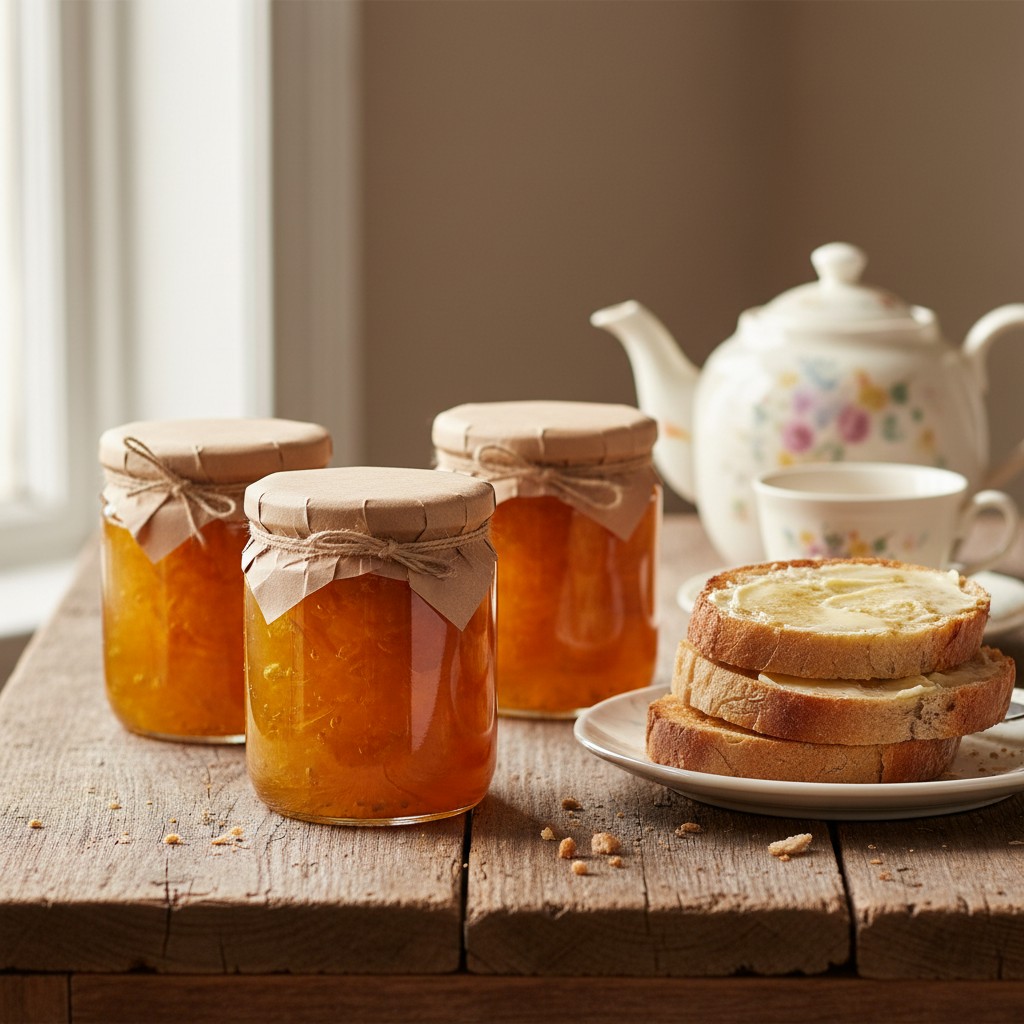
There's nothing quite like the vibrant tang and glistening peel of a truly homemade marmalade to brighten any breakfast table. This classic recipe ensures a beautifully set, wonderfully flavourful preserve, a real testament to traditional British baking.
Why You'll Love This Recipe
- Uses traditional Seville oranges for authentic flavour and natural pectin.
- Detailed, step-by-step instructions ensure a perfect set and clear, vibrant jelly.
- A truly rewarding process that yields a superior, long-lasting preserve.
Ingredients
- 1 kg (2 lb 4 oz) Seville oranges
- 2 large lemons
- 2.5 litres (4½ pints) cold water
- 2 kg (4 lb 8 oz) granulated sugar (or preserving sugar)
Equipment Needed
Large non-reactive preserving pan (preferably copper or stainless steel) • Wooden spoon • Sharp knife and chopping board • Muslin cloth and string (or a jelly bag) • Heatproof ladle • Jam funnel (optional, but highly recommended) • Sterilised jam jars with lids (approx. 6 x 450g) • Small plate (for testing setting point) • Kitchen thermometer (optional, but helpful for setting point - 104-105°C)

Step-by-Step Instructions
- **1. Prepare the Fruit (Soaking):** Begin by scrubbing the oranges and lemons thoroughly. Cut them in half and squeeze out all the juice, reserving any pips. Tie the pips and any fibrous membrane from the fruit into a piece of muslin cloth – this 'pectin bag' is crucial for setting. Chop the orange and lemon rinds finely or into thicker shreds, according to your preference. Place the chopped rind, fruit juice, and the muslin bag into a large, non-reactive preserving pan. Pour over the cold water, cover, and leave to soak overnight (or for at least 12 hours). This softens the peel beautifully.
- **2. First Boil:** The next day, bring the mixture in the preserving pan to a boil, then reduce the heat and simmer gently for about 1½ to 2 hours, or until the peel is completely tender. You should be able to press a piece of peel easily against the side of the pan with a wooden spoon. Remove the muslin bag, squeezing it well over the pan to extract all the pectin-rich liquid. Discard the bag.
- **3. Add Sugar & Sterilise Jars:** Measure the sugar. For every 1 litre (1¾ pints) of liquid in the pan, you'll need approximately 750g (1 lb 10 oz) of sugar. Place your clean jam jars and lids in a cold oven and heat to 140°C (120°C fan/Gas 1) for at least 15 minutes to sterilise them. Alternatively, wash them in hot, soapy water, rinse well, and dry in a warm oven.
- **4. Second Boil & Setting Point:** Add the measured sugar to the pan with the fruit and liquid. Stir gently over a low heat until all the sugar has completely dissolved. Do not rush this stage, as undissolved sugar can lead to crystallisation later. Once dissolved, increase the heat and bring the marmalade to a rolling boil. Boil rapidly for 15-30 minutes, or until it reaches the setting point.
- **5. Test for Setting Point:** To test for the setting point, place a small plate in the freezer before you start boiling. After 15 minutes of rapid boiling, drop a teaspoon of marmalade onto the cold plate. Leave it for a minute, then push it with your finger. If it wrinkles, it has reached the setting point. If not, continue boiling for another 5 minutes and test again. Repeat until the setting point is achieved. Be patient, my dears, as this is the most crucial step!
- **6. Rest & Potting:** Once the setting point is reached, remove the pan from the heat. Skim off any foam from the surface with a metal spoon. Allow the marmalade to stand for 15-20 minutes in the pan; this helps to distribute the peel evenly throughout the jars. Carefully pour the hot marmalade into the hot, sterilised jars using a ladle and a jam funnel. Fill them right to the brim.
- **7. Seal & Store:** Immediately cover the jars with their sterilised lids or waxed discs and cellophane covers. Label clearly with the date. Store in a cool, dark place. The marmalade will be ready to enjoy once fully cooled and set.
How to Store \u0026 Reheat
Once sealed, homemade marmalade will keep for at least 12-18 months in a cool, dark cupboard. Once opened, store in the refrigerator and consume within 2-3 months. Marmalade does not typically require reheating; it's best served at room temperature.
Mary's Secrets to Success
Sterilisation is paramount: Always ensure your jars and lids are scrupulously clean and sterilised to prevent spoilage and ensure your marmalade lasts. Patience with the pectin: The muslin bag containing the pips and membrane is your secret weapon for a good set. Don't skip it, and squeeze it thoroughly! The setting point test: This is the most crucial step. Trust your cold plate test – it truly is the most reliable way to tell if your marmalade is ready. Don't be afraid to keep testing every few minutes. Allow to rest: Letting the marmalade stand for 15-20 minutes before potting allows the peel to distribute beautifully throughout the jars, preventing it from all sinking to the bottom.
Frequently Asked Questions
Why are Seville oranges so important for marmalade?
Ah, Seville oranges are truly the star here, my dears! They are prized for their wonderfully bitter flavour and, crucially, their exceptionally high pectin content. Pectin is a natural gelling agent that ensures your marmalade sets beautifully without the need for additional commercial pectin. Without them, you simply won't achieve that classic marmalade taste and texture.
How can I ensure my marmalade reaches the setting point?
Patience, my love, is key! The secret lies in a rapid, rolling boil and regular testing with a chilled plate. Don't be tempted to add more sugar, as this can make it too sweet and sometimes prevent setting. Ensure all the sugar is dissolved before boiling, and if it's struggling, check your pectin bag was well-squeezed. A good kitchen thermometer, aiming for 104-105°C (219-221°F), can also be a wonderful guide.
My marmalade looks cloudy. What went wrong?
A cloudy marmalade can sometimes happen if you boil the fruit too vigorously before adding the sugar, or if you squeeze the pectin bag too harshly, forcing pulp through the muslin. It can also occur if the sugar isn't fully dissolved before the rapid boil. Don't worry too much, my dears; it will still taste absolutely delicious, even if it's not quite as crystal clear as you might hope!
Can I use a slow cooker to make marmalade?
While some people do experiment with slow cookers for the initial softening of the fruit, I find the traditional method in a large preserving pan gives the best results for marmalade. The rapid, high heat of the rolling boil is essential for activating the pectin and achieving that perfect set and vibrant colour that is the hallmark of a truly wonderful marmalade.
How long should the peel be?
This is entirely down to personal preference, my dear! Some prefer a very fine, delicate shred, while others, myself included, adore a good, chunky cut of peel to really get your teeth into. Just ensure your chosen size is consistent so it cooks evenly. The beauty of homemade is that you can tailor it exactly to your liking!