Mary Berry Recipes
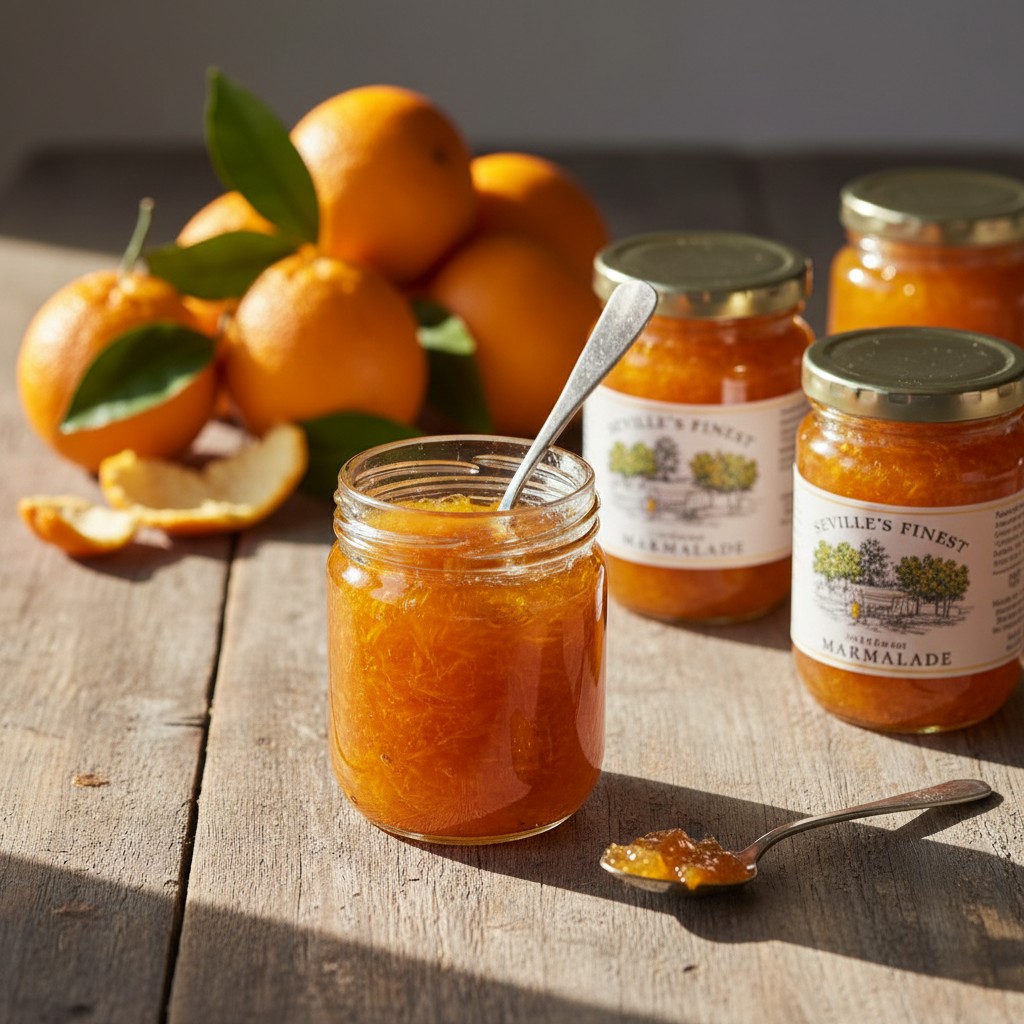
Classic Seville Orange Marmalade
There's nothing quite like the vibrant taste of homemade marmalade to brighten a winter's morning. This recipe, a true classic, ensures a truly glorious preserve every time.
Why You'll Love This Recipe
- Employs classic techniques for a consistently perfect set and flavour.
- Utilises the natural pectin of Seville oranges, ensuring a vibrant, clear marmalade.
- Provides a delightful balance of sweet and bitter, with tender, flavourful peel.
Ingredients
- 900g (2 lb) Seville oranges
- 2.2 litres (4 pints) water
- 1 lemon, juice only
- 1.8kg (4 lb) granulated sugar (or caster sugar for a clearer marmalade)
Equipment Needed
Large, heavy-bottomed preserving pan (at least 6-litre capacity) • Sharp knife • Chopping board • Large bowl for juice • Muslin cloth or a fine-mesh bag • Kitchen string • Long-handled wooden spoon or heatproof spatula • Heatproof ladle • Several small saucers (for testing the set) • Jam funnel (optional, but very helpful) • Sterilised jam jars with lids (approx. 6-8 x 450g jars) • Oven gloves or tea towels

Step-by-Step Instructions
- **Prepare the Oranges:** Begin by thoroughly washing the Seville oranges. Cut them in half and squeeze out all the juice, reserving the pips and any pith. Tie the pips and pith securely in a piece of muslin cloth – this 'pectin bag' is crucial for helping the marmalade set.
- **Shred the Peel:** With a sharp knife, shred the orange peel to your desired thickness. Some prefer thin slivers, others a chunkier cut. Place the shredded peel into a large, heavy-bottomed preserving pan.
- **Soak and Soften:** Add the reserved orange juice, the lemon juice, the 2.2 litres of water, and the muslin bag of pips and pith to the pan with the shredded peel. Bring the mixture gently to a boil, then reduce the heat and simmer, uncovered, for about 1½ to 2 hours, or until the peel is beautifully tender and the liquid has reduced by about a third. The peel should be soft enough to easily squash between your fingers.
- **Remove Pectin Bag:** Carefully remove the muslin bag from the pan, pressing it against the side of the pan with a spoon to extract all the precious pectin-rich liquid before discarding.
- **Add Sugar:** Add the granulated sugar to the pan. Stir gently over a low heat until the sugar has completely dissolved. This step is vital to prevent crystallisation later, so be patient and don't rush it.
- **Bring to a Rolling Boil:** Once the sugar is fully dissolved, increase the heat and bring the marmalade to a rapid, rolling boil. This is where the magic of setting happens! Boil vigorously for approximately 15-25 minutes, stirring occasionally to prevent sticking.
- **Test for Set:** To check if the marmalade has reached its setting point, remove the pan from the heat. Place a teaspoonful of marmalade onto a cold saucer (chilled in the fridge or freezer). Leave it for a minute, then push your finger through it. If the surface wrinkles, it's ready. If not, return the pan to the heat and boil for another 5 minutes, then re-test. Repeat until the setting point is reached.
- **Cool and Pot:** Once the setting point is achieved, remove the pan from the heat. Allow the marmalade to stand for about 10-15 minutes. This allows the peel to distribute evenly throughout the preserve and prevents it from sinking to the bottom of the jars. Skim off any foam from the surface with a metal spoon.
- **Sterilise Jars:** While the marmalade is cooling slightly, ensure your jam jars and lids are sterilised. You can do this by washing them in hot, soapy water, rinsing thoroughly, and then placing them upside down in a warm oven (around 140°C/120°C fan/Gas 1) for at least 15 minutes. Alternatively, run them through a hot cycle in a dishwasher.
- **Fill Jars:** Carefully ladle the hot marmalade into the warm, sterilised jars right up to the brim. Seal immediately with sterilised lids.
- **Store:** Label your jars with the date. Once completely cool, store in a cool, dark place.
How to Store \u0026 Reheat
Once sealed and cooled, your homemade marmalade will keep beautifully in a cool, dark cupboard for up to a year, thanks to the high sugar content acting as a natural preservative. Once opened, store it in the refrigerator and aim to consume it within a month or two. There's no need to reheat marmalade; it's always ready to be enjoyed straight from the jar!
Mary's Secrets to Success
My dears, for a truly magnificent marmalade, remember these little nuggets of wisdom: 1. **Preparation is Key:** Don't rush the initial soaking and simmering of the peel. This is where the magic truly begins, ensuring your peel is wonderfully tender. 2. **The Pectin Power:** That muslin bag of pips and pith is your best friend for a perfect set. Make sure to squeeze every last drop of goodness from it! 3. **Dissolve Gently:** Always ensure the sugar is completely dissolved over a low heat *before* bringing it to a rolling boil. This prevents crystallisation and ensures a clear, beautiful preserve. 4. **The Cold Saucer Test:** This is your reliable indicator for the setting point. Don't be afraid to test a few times – patience is a virtue in marmalade making! 5. **Sterilisation, Sterilisation, Sterilisation!** This cannot be stressed enough. Clean, hot, sterilised jars are essential for long-lasting, mould-free marmalade. It's the crowning glory for all your hard work!
Frequently Asked Questions
My marmalade isn't setting. What went wrong?
Oh dear, this is a common query, but easily remedied! The most likely culprit is that it hasn't boiled long enough to reach the setting point. Ensure you have a good, vigorous, rolling boil and test frequently with the cold saucer method. Sometimes, a little extra lemon juice can help, as the acid aids the pectin in setting. Don't despair; you can always re-boil it for a further 5-10 minutes and re-test!
How can I ensure the peel is tender?
The secret to beautifully tender peel lies in the initial simmering stage. You must allow ample time for the peel to soften completely in the water and juice *before* adding the sugar. If the sugar is added too early, it can toughen the peel, making it chewy. So, be patient during that first hour and a half to two hours!
Can I use other types of oranges?
You certainly can, my dear, but do be aware that Seville oranges are prized for their high pectin content and wonderful bitter flavour, which is characteristic of traditional marmalade. If you use sweeter oranges like Navel or Valencia, you might find the set isn't quite as firm, and the flavour will be much milder. You may need to add a sachet of commercial pectin to ensure a good set with other varieties.
Why is my marmalade cloudy?
A cloudy marmalade can often be attributed to boiling too vigorously before the sugar has fully dissolved, or perhaps not skimming off enough of the foam during the cooling stage. Some cloudiness can also occur if the pectin bag bursts or is squeezed too hard, releasing fine particles into the mixture. It won't affect the flavour, but for a truly clear marmalade, gentle handling and careful skimming are key.
How do I prevent mould forming on top?
Mould is usually a sign of inadequate sterilisation of your jars and lids, or not filling the jars right to the brim, leaving too much air space. Always ensure your jars are perfectly clean and sterilised, and that the marmalade is piping hot when poured into the warm jars. Sealing them immediately creates a vacuum seal that helps preserve the marmalade beautifully.