Mary Berry Recipes
Classic Bread and Butter Pudding
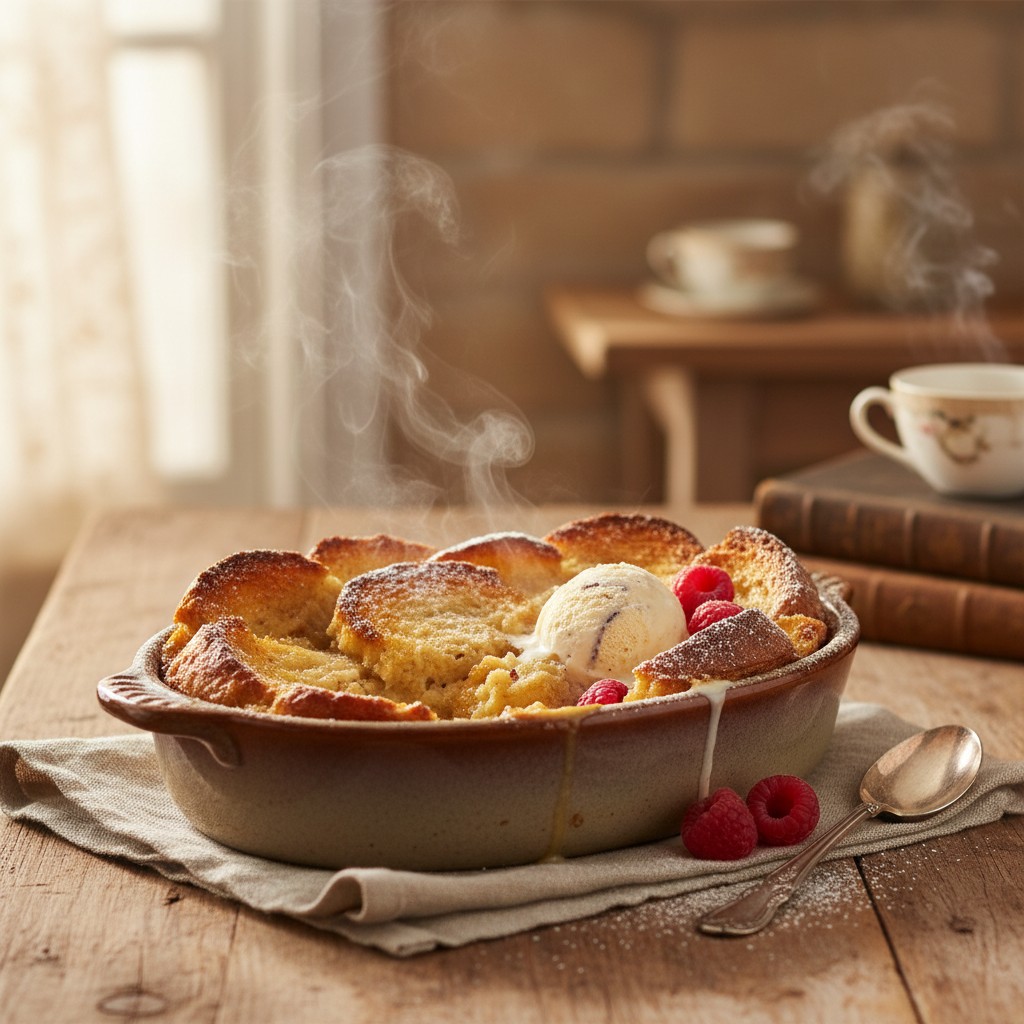
There's something truly magical about a warm, comforting bread and butter pudding straight from the oven. This classic recipe, passed down through generations, turns humble ingredients into sheer perfection.
Why You'll Love This Recipe
- Transforms everyday ingredients into a luxurious dessert, reducing food waste.
- The combination of soft bread, creamy custard, and a hint of spice creates a wonderfully comforting texture and flavour.
- It's a straightforward recipe, perfect for beginners and seasoned bakers alike, yielding consistently delicious results.
Ingredients
- 8-10 slices of day-old white bread (such as brioche, challah, or good quality white sandwich bread)
- 50g unsalted butter, softened
- 50g caster sugar, plus extra for sprinkling
- 50g sultanas or raisins (optional)
- 4 large eggs
- 500ml full-fat milk
- 100ml double cream
- 1 teaspoon vanilla extract
- Freshly grated nutmeg, for sprinkling
Equipment Needed
2-litre ovenproof baking dish (approx. 25cm x 20cm) • Large mixing bowl • Whisk • Measuring jug • Grater (for nutmeg)
Step-by-Step Instructions
- Prepare the bread: Preheat your oven to 180°C (160°C fan/Gas Mark 4). Lightly butter a 2-litre ovenproof dish (approx. 25cm x 20cm). Take each slice of bread and generously butter one side.
- Arrange the bread: Cut the buttered bread slices into triangles or halves. Arrange them in the prepared dish, buttered side up, overlapping them slightly until the base is covered. If using, scatter the sultanas or raisins evenly over the bread.
- Make the custard: In a large mixing bowl, whisk the eggs, caster sugar, milk, double cream, and vanilla extract together until well combined. It should be a lovely, smooth mixture.
- Pour the custard: Carefully pour the custard mixture over the bread in the dish. Gently press the bread down with the back of a spoon to ensure it's all well soaked. Let it stand for about 10-15 minutes to allow the bread to absorb the liquid thoroughly. This is a crucial step for a wonderfully moist pudding!
- Bake: Sprinkle a little extra caster sugar and a generous grating of fresh nutmeg over the top. Place the dish in the preheated oven and bake for 40-45 minutes, or until the pudding is golden brown, puffed up, and the custard is set but still has a slight wobble in the centre.
- Serve: Remove from the oven and allow to cool slightly before serving. It's truly at its best served warm, perhaps with a dollop of cream, a scoop of vanilla ice cream, or a drizzle of custard. Sheer perfection!
How to Store \u0026 Reheat
Any leftover bread and butter pudding can be stored, covered, in the refrigerator for up to 2-3 days. To reheat, you can gently warm individual portions in the microwave until heated through, or place the entire dish (covered with foil) in a moderate oven (160°C/140°C fan/Gas Mark 3) for about 20-25 minutes, or until piping hot. Be careful not to overcook, as it can dry out.
Mary's Secrets to Success
The secret to a truly magnificent bread and butter pudding lies in the quality of your ingredients and a little patience. Don't skimp on the butter or use stale, flavourless bread – a good quality loaf makes all the difference. And do allow the bread to soak in that creamy custard for a good 10-15 minutes; it ensures every morsel is wonderfully moist and tender. A generous grating of fresh nutmeg at the end adds that delightful, classic aroma and flavour. It's these little touches that elevate a simple pudding to something truly special, a real family favourite that will be requested again and again!
Frequently Asked Questions
Q: Can I use fresh bread instead of day-old bread?
A: While day-old bread is traditional and absorbs the custard beautifully without becoming soggy, you can use fresh bread. Simply toast it lightly in a toaster or under the grill for a minute or two on each side to dry it out slightly before buttering. This helps it hold its shape and soak up the custard wonderfully.
Q: How do I prevent the pudding from being too eggy?
A: The key is in the balance of eggs to liquid and not overbaking. This recipe uses a classic ratio that ensures a creamy, not overly eggy, custard. Ensure you don't overcook it; the centre should still have a slight wobble when it comes out of the oven, as it will continue to set as it cools.
Q: Can I make this ahead of time?
A: You can assemble the pudding, pour over the custard, and let it soak for up to an hour in the refrigerator before baking. For longer, I'd suggest making the custard and arranging the bread, but pouring the custard just before baking, as the bread can become too soggy if left for too long.
Q: What kind of dish should I use?
A: A ceramic or glass ovenproof dish, approximately 2 litres in capacity (around 25cm x 20cm or a similar oval shape), is ideal. You want one that's deep enough to hold the bread and custard comfortably.
Q: Why is my pudding dry?
A: A dry pudding is usually a sign of overbaking. Keep an eye on it towards the end of the cooking time. The custard should be set but still have a slight quiver. Also, ensure your bread is properly soaked in the custard before baking; pressing it down gently helps with absorption.
Useful Baking Tools
Wrong tin size, a fan oven, or ingredients in cups or ounces? Convert everything first with our free tools: