Mary Berry Recipes
Classic Dundee Cake
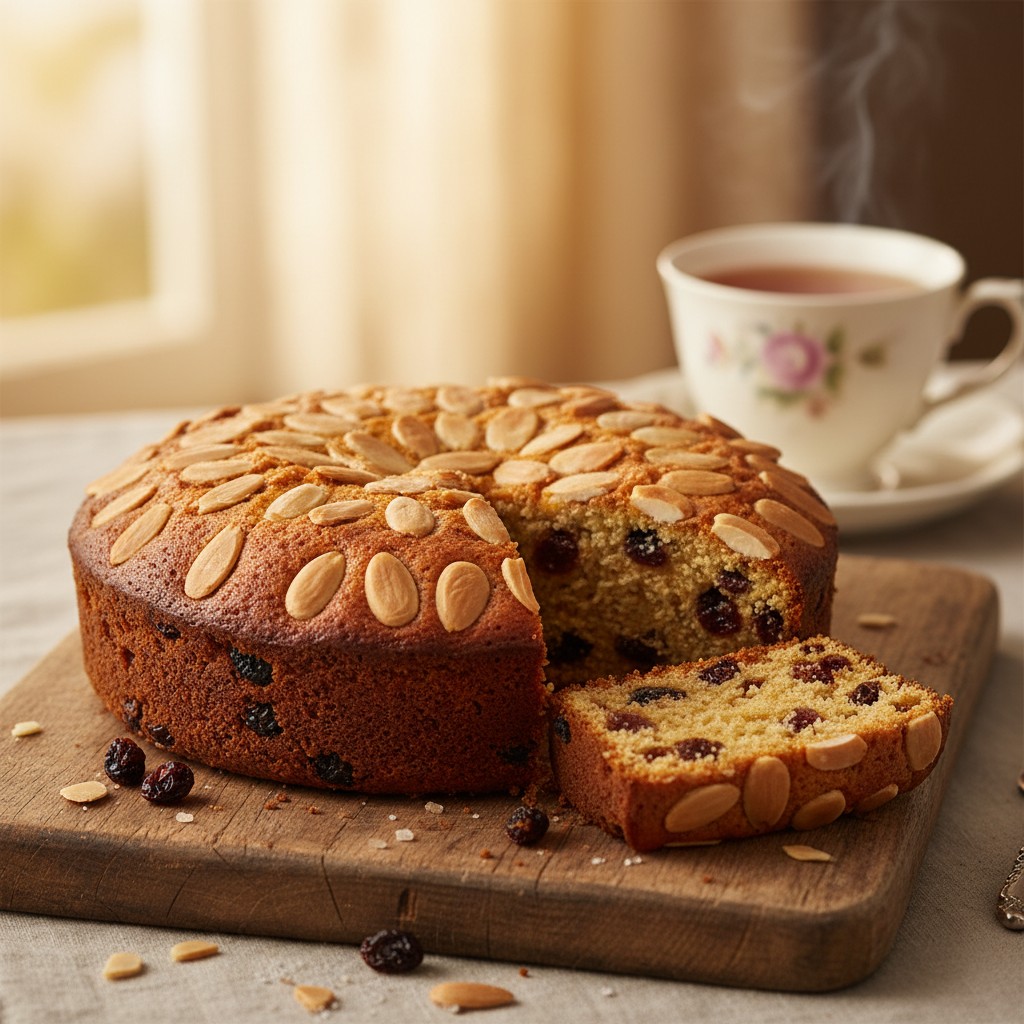
There's nothing quite so comforting as a slice of a beautifully made fruit cake, and my Dundee Cake recipe is a true testament to British baking heritage. With its vibrant fruits and signature almond topping, it's a delightful centrepiece for any tea party or celebration.
Why You'll Love This Recipe
- A classic, time-tested recipe that delivers consistent, delicious results.
- The cake keeps beautifully, meaning you can bake it ahead of time for entertaining or gifting.
- Relatively straightforward to make, offering a satisfying baking experience for all skill levels.
Ingredients
- 225g (8oz) unsalted butter, softened
- 225g (8oz) light muscovado sugar
- 4 large eggs, beaten
- 350g (12oz) plain flour
- 1 teaspoon baking powder
- 1 teaspoon mixed spice
- Pinch of salt
- 450g (1lb) mixed dried fruit (sultanas, currants, raisins)
- 50g (2oz) glacé cherries, halved
- 50g (2oz) chopped candied peel
- Zest of 1 large orange
- Zest of 1 large lemon
- 3 tablespoons marmalade, warmed (for brushing, optional)
- 50g (2oz) whole blanched almonds (for topping)
Equipment Needed
20cm (8-inch) round cake tin • Baking parchment • Large mixing bowl • Electric mixer (optional) • Sieve • Measuring spoons and cups/scales • Large metal spoon • Wire cooling rack • Skewer

Step-by-Step Instructions
- Preheat your oven to 160°C (140°C fan / Gas Mark 3). Grease and line a 20cm (8-inch) round cake tin with baking parchment, ensuring the parchment extends a little above the rim.
- In a large mixing bowl, cream together the softened butter and light muscovado sugar until the mixture is light and fluffy. This is where a good electric mixer comes in handy, but a wooden spoon and a bit of elbow grease will do just as well!
- Gradually add the beaten eggs, a little at a time, beating well after each addition. If the mixture looks like it's about to curdle, add a spoonful of flour.
- Sift the plain flour, baking powder, mixed spice, and a pinch of salt into the bowl. Gently fold these dry ingredients into the butter and egg mixture using a large metal spoon, being careful not to overmix. We want to keep that lovely, light texture.
- Now, stir in the mixed dried fruit, glacé cherries, candied peel, orange zest, and lemon zest. Ensure everything is evenly distributed throughout the batter. This is where all those wonderful flavours come together!
- Spoon the cake mixture into your prepared cake tin and gently level the top with the back of your spoon. Don't press it down too firmly, as we want a lovely, tender crumb.
- Carefully arrange the whole blanched almonds in concentric circles on top of the cake. This is the signature look of a Dundee Cake, so take your time and make it look beautiful.
- Bake in the preheated oven for 1 hour, then reduce the temperature to 150°C (130°C fan / Gas Mark 2) and continue to bake for another 45 minutes to 1 hour, or until a skewer inserted into the centre of the cake comes out clean. If the top starts to brown too much, you can loosely cover it with a piece of foil.
- Once baked, remove the cake from the oven and let it cool in the tin for 15-20 minutes before turning it out onto a wire rack to cool completely. If you like, while it's still warm, you can gently brush the top with warmed marmalade for a lovely sheen and extra citrus flavour.
- Once completely cool, wrap your magnificent Dundee Cake in baking parchment and then in foil. It truly tastes best after a day or two, allowing all those wonderful flavours to fully develop and mature.
How to Store \u0026 Reheat
This wonderful cake stores exceptionally well. Once completely cool, wrap it tightly in baking parchment and then in aluminium foil. Store it in an airtight container in a cool, dark place (like a larder or pantry) for up to 2 weeks. It actually tastes even better after a day or two, as the flavours have a chance to meld and deepen. For longer storage, Dundee Cake freezes beautifully for up to 3 months. Wrap individual slices or the whole cake very well in cling film, then in foil, before freezing. To enjoy, simply thaw at room temperature for several hours or overnight. There's no need to reheat; it's best served at room temperature.
Mary's Secrets to Success
My secrets to success for a truly perfect Dundee Cake are quite simple, but oh so important! Firstly, ensure your butter and eggs are at room temperature; this helps create a beautifully emulsified, light batter. Secondly, don't overmix the batter once the flour is added; gentle folding is key to a tender crumb. And finally, trust your instincts and your skewer – a clean skewer means a perfectly baked cake. Once cooled, wrap it well; like a good friend, this cake only gets better with age!
Frequently Asked Questions
Why is it called Dundee Cake?
The Dundee Cake is believed to have originated in Dundee, Scotland, in the 18th century. Legend has it that Mary Queen of Scots disliked glacé cherries, so the cake was created without them, instead using blanched almonds as its distinctive topping, which became its hallmark.
Can I make this cake ahead for Christmas?
Absolutely, my dear! Dundee Cake is an excellent choice for making ahead, especially for festive occasions like Christmas. Its flavour and moisture actually improve over time. Bake it 2-3 weeks in advance, wrap it well, and store it in an airtight container. You can even 'feed' it a tablespoon or two of brandy or whisky every week to keep it extra moist and flavourful, though this is entirely optional for a Dundee Cake.
How do I prevent the almonds from sinking or burning?
The key to perfectly placed almonds is to arrange them neatly on the surface of the cake batter *before* baking. They are light enough not to sink into this relatively firm batter. To prevent them from burning, if you notice them browning too quickly during baking, simply cover the top of the cake loosely with a piece of aluminium foil for the remainder of the cooking time.
What kind of mixed fruit is best for Dundee Cake?
For the best flavour and texture, I always recommend using good quality, plump mixed dried fruit. A classic mix of sultanas, currants, and raisins is perfect. You can also add a small amount of chopped dried apricots or cranberries for extra colour and tang, but do ensure they are finely chopped so they distribute well.
My cake turned out a bit dry; what might have gone wrong?
A dry cake is often a sign of overbaking, my dear. Oven temperatures can vary, so it's always best to check for doneness with a skewer. If it comes out clean, the cake is ready. Another reason could be that your butter or eggs weren't at room temperature, which can affect the emulsification of the batter, leading to a less moist crumb. Make sure to measure your ingredients precisely, too!