Mary Berry Recipes
Mary Berry's Luxurious Béarnaise Sauce
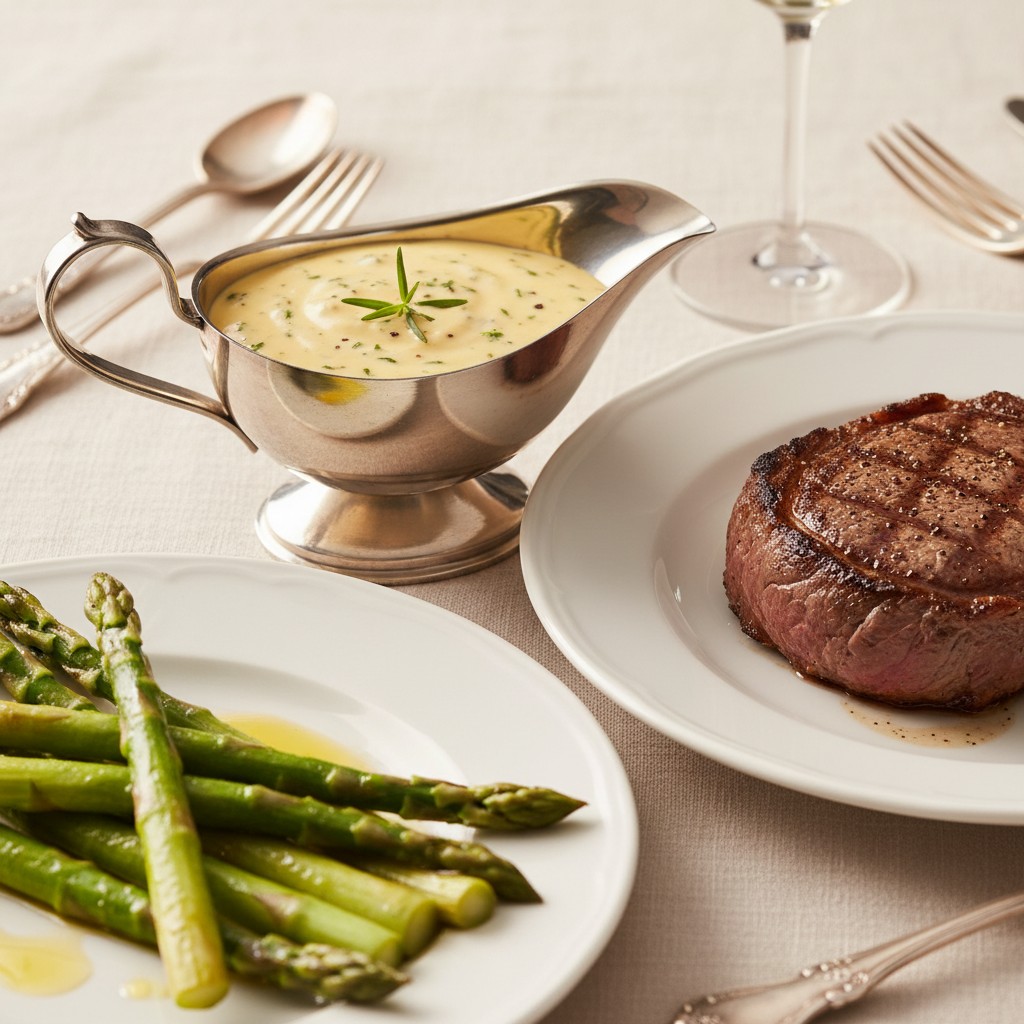
Prepare to elevate your dinner parties with a sauce that speaks of elegance and flavour. This Béarnaise is wonderfully simple to achieve and utterly irresistible.
Why You'll Love This Recipe
- Uses a classic, foolproof method for a stable emulsion, reducing the risk of splitting.
- Highlights fresh tarragon and shallots for an authentic, vibrant flavour that truly sings.
- Achieves a wonderfully smooth and rich texture that complements a wide variety of dishes, from meats to vegetables.
Ingredients
- 3 large egg yolks, preferably free-range
- 1 tbsp white wine vinegar
- 1 tbsp finely chopped fresh tarragon leaves, plus extra for garnish
- 1/2 shallot, very finely chopped
- 1/4 tsp freshly ground black pepper
- 175g unsalted butter, melted and kept warm
- Pinch of salt, to taste
Equipment Needed
Small heavy-bottomed saucepan • Heatproof bowl (stainless steel or glass) • Saucepan for bain-marie • Balloon whisk • Small sieve (optional, for straining out shallots if desired)
Step-by-Step Instructions
- Begin by preparing your flavour base. In a small, heavy-bottomed saucepan, combine the white wine vinegar, chopped tarragon, chopped shallot, and black pepper. Bring this mixture to a gentle simmer over medium heat and reduce it until only about 1 tablespoon of liquid remains. This concentrates the flavours beautifully. Remove from the heat and let it cool slightly.
- Next, set up a bain-marie. Fill a saucepan with about 2-3 cm of water and bring it to a gentle simmer. Place a heatproof bowl that fits snugly over the saucepan, ensuring the bottom of the bowl does not touch the simmering water.
- Add the reduced vinegar mixture and the egg yolks to the heatproof bowl. Whisk vigorously and continuously with a balloon whisk. The mixture will begin to thicken and become pale and frothy. This process is crucial for cooking the egg yolks gently without scrambling them.
- Once the egg yolk mixture is thick enough to coat the back of a spoon, and you can see the bottom of the bowl briefly when you draw the whisk through it, remove the bowl from the heat. Keep whisking for another minute or two off the heat to prevent overcooking.
- Now for the butter. While still whisking constantly, slowly drizzle in the warm, melted butter, starting with just a few drops at a time. As the sauce begins to emulsify and thicken, you can add the butter in a slightly steadier stream, but always keep whisking. The key here is patience!
- Continue whisking until all the butter has been incorporated and the sauce is thick, smooth, and glossy. If the sauce becomes too thick, you can whisk in a teaspoon or two of warm water to loosen it slightly.
- Taste the Béarnaise and season with a pinch of salt if needed. Serve immediately. If you need to hold it for a short time, keep it in a warm, but not hot, place, stirring occasionally. Do not reheat directly over heat as it will split.
How to Store \u0026 Reheat
Béarnaise sauce is best enjoyed freshly made. It's an emulsion, which means it can be temperamental when stored or reheated. If you must store it, place it in an airtight container in the refrigerator for no more than 1-2 days. To gently warm it, place the container in a bowl of warm (not hot) water and stir gently until it reaches a lukewarm temperature. Avoid direct heat or microwave, as this will almost certainly cause it to split. If it does split, you can try to rescue it by whisking a fresh egg yolk with a teaspoon of warm water in a clean bowl, then slowly whisking in the split sauce.
Mary's Secrets to Success
My dears, the secret to a truly wonderful Béarnaise lies in two things: patience and a gentle hand. Don't rush the reduction, and certainly don't rush adding that glorious melted butter. A steady stream and constant whisking will ensure your sauce is beautifully smooth and won't split. And do use fresh tarragon – it makes all the difference to the flavour. It's a sauce that truly rewards your efforts, turning a simple meal into something quite extraordinary. Enjoy every spoonful!
Frequently Asked Questions
My sauce has split! Can I fix it?
Oh dear, that can be disheartening, but don't despair! Often, you can rescue it. Whisk a fresh egg yolk with a teaspoon of warm water in a clean bowl. Then, very slowly, whisk the split Béarnaise into this new mixture, a little at a time, until it emulsifies again. Patience is key here!
Can I make this ahead of time?
While it's truly best served immediately, you can make the reduction (vinegar, tarragon, shallot) a day in advance and store it in the fridge. This saves a little time on the day. The final emulsification should always be done just before serving for the best texture and flavour.
What's the difference between Béarnaise and Hollandaise?
They are very similar, both being egg yolk and butter emulsions. The main difference lies in the flavouring. Hollandaise uses lemon juice and often cayenne pepper, while Béarnaise uses a reduction of white wine vinegar, shallots, and fresh tarragon, giving it a more herbaceous and tangy profile.
How do I know when the egg yolks are cooked enough but not scrambled?
The key is constant whisking over a gentle bain-marie. The mixture should become pale yellow, thick, and frothy, and when you lift the whisk, it should leave a ribbon trail. When you can briefly see the bottom of the bowl as you whisk, it's usually ready. If you see any signs of scrambling, immediately remove it from the heat and whisk vigorously off the heat.
My sauce is too thick/thin. How can I adjust it?
If it's too thick, you can whisk in a teaspoon or two of warm water, a little at a time, until it reaches your desired consistency. If it's too thin, it might not have emulsified properly or perhaps you added the butter too quickly. You can try to rescue a thin sauce by whisking in another egg yolk or two over very gentle heat, but it can be tricky.
Useful Baking Tools
Wrong tin size, a fan oven, or ingredients in cups or ounces? Convert everything first with our free tools: