Mary Berry Recipes
Classic Golden Plum Cake
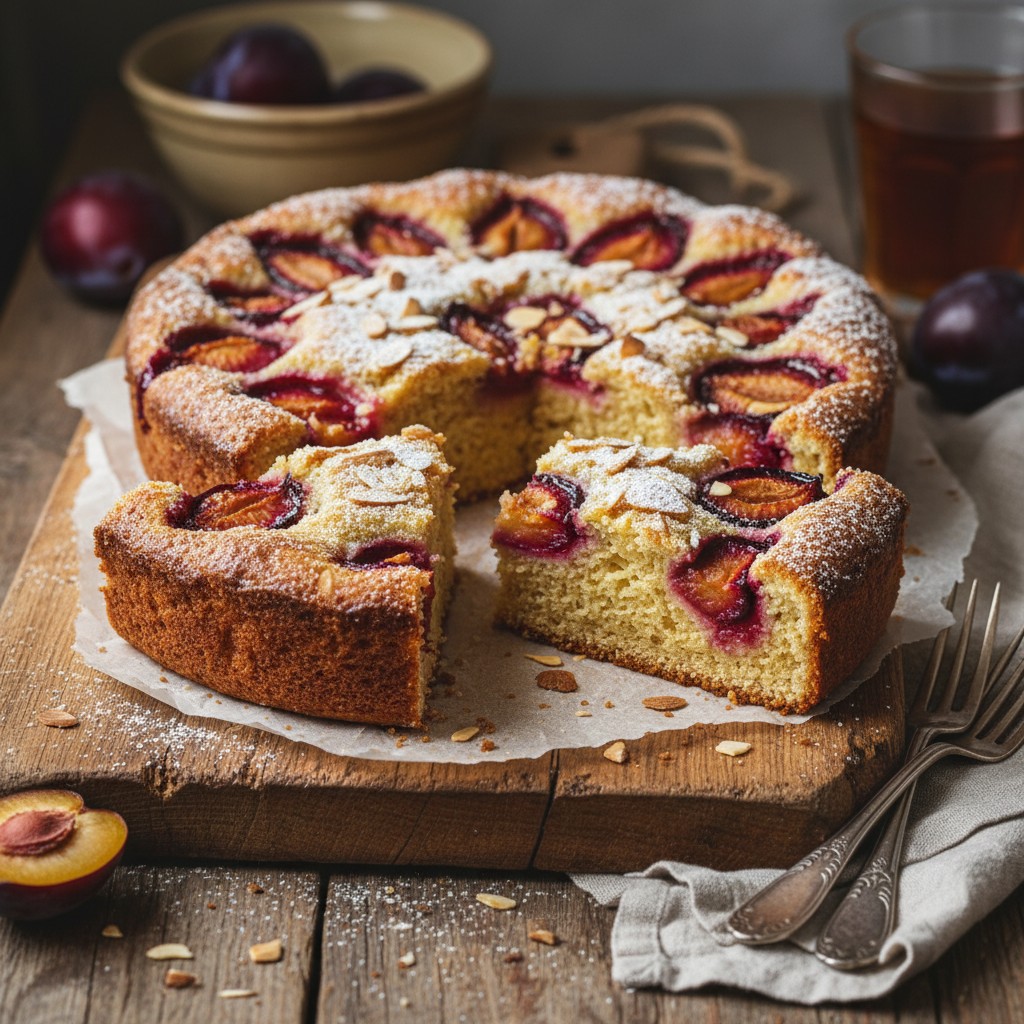
This delightful plum cake is a true taste of home, brimming with juicy plums and a wonderfully tender crumb. It's a remarkably simple recipe that yields utterly delicious results every time.
Why You'll Love This Recipe
- It beautifully showcases the natural sweetness and slight tartness of seasonal plums.
- The 'all-in-one' method ensures a wonderfully moist and tender cake with minimal fuss.
- The demerara sugar topping provides a delightful crunchy texture contrast to the soft fruit and cake.
Ingredients
- 225g (8oz) self-raising flour
- 175g (6oz) caster sugar
- 175g (6oz) softened unsalted butter
- 3 large free-range eggs
- 1 teaspoon vanilla extract
- Finely grated zest of 1 lemon (optional, but lovely!)
- 450g (1lb) plums, halved and stoned (such as Victoria or Czar)
- 2 tablespoons demerara sugar, for sprinkling
Equipment Needed
20cm (8-inch) round springform cake tin • Baking parchment • Large mixing bowl • Electric hand mixer or stand mixer • Spatula • Wire cooling rack • Skewer

Step-by-Step Instructions
- Preheat your oven to 180°C (160°C fan/Gas Mark 4). Lightly grease a 20cm (8-inch) round springform cake tin and line the base with baking parchment. This ensures your beautiful cake will release perfectly.
- In a large mixing bowl, measure the flour, caster sugar, softened butter, eggs, and vanilla extract. If using, add the lovely lemon zest now. Beat everything together using an electric mixer on a medium speed for about 2-3 minutes, until the mixture is light, fluffy, and well combined. Be careful not to overmix, as we want a tender crumb.
- Gently fold about half of the halved plums into the cake batter. This will ensure lovely pockets of fruit throughout the cake. Spoon the mixture evenly into your prepared cake tin and gently level the top with the back of a spoon.
- Arrange the remaining plum halves on top of the cake mixture, cut-side up, pressing them in ever so slightly. Don't be shy; a generous topping looks ever so inviting! Sprinkle the demerara sugar evenly over the plums; this will create a wonderful caramelised crust.
- Bake in the preheated oven for 50-60 minutes, or until the cake is golden brown, risen, and a skewer inserted into the centre comes out clean. If the top is browning too quickly, you can loosely cover it with a piece of foil for the last 10-15 minutes.
- Once baked to sheer perfection, remove the cake from the oven and let it cool in the tin for 10-15 minutes before carefully releasing it and transferring it to a wire rack to cool completely. Patience is a virtue, and it's worth waiting for the cake to set properly.
- Serve slices of this delightful plum cake warm or at room temperature, perhaps with a dollop of crème fraîche, a spoonful of clotted cream, or a scoop of vanilla ice cream. Enjoy every single bite!
How to Store \u0026 Reheat
To keep your lovely plum cake fresh, store it in an airtight container at room temperature for up to 3-4 days. If you wish to keep it longer, it freezes beautifully! Wrap individual slices or the whole cooled cake tightly in cling film and then in foil, and freeze for up to 3 months. To enjoy after freezing, simply thaw at room temperature for a few hours. You can gently warm individual slices in a microwave for 20-30 seconds, or in a moderate oven (160°C/140°C fan) for about 10-15 minutes, until just warmed through. It will taste as though it's just come out of the oven!
Mary's Secrets to Success
My 'Secrets to Success' for this delightful plum cake are quite simple: always ensure your butter and eggs are at room temperature – this makes for a much smoother, lighter batter. Don't be tempted to overmix the batter once the flour is added; a gentle hand is key for a tender crumb. And remember, the skewer test is your best friend for knowing when the cake is perfectly baked; it should come out clean. These little touches make all the difference!
Frequently Asked Questions
Can I use frozen plums for this recipe?
Yes, you certainly can use frozen plums! There's no need to thaw them first; simply halve and stone them if they aren't already, then toss them in a tablespoon of flour before adding to the batter. This helps prevent them from sinking and releases less moisture. You might need to add a few extra minutes to the baking time.
How do I prevent the plums from sinking to the bottom?
A little trick I've found very useful is to toss the plums in a tablespoon of the self-raising flour (taken from the measured amount, not extra) before folding them into the batter. This light coating helps them suspend more evenly throughout the cake as it bakes. For the plums on top, pressing them in gently helps too!
My cake is browning too quickly on top, what should I do?
Not to worry, dear! If you notice the top browning too rapidly before the cake is cooked through, simply loosely cover the cake with a piece of aluminium foil for the remainder of the baking time. This will protect the top while allowing the inside to cook perfectly.
What kind of plums are best for this cake?
Victoria plums are an absolute dream for this cake, as they're wonderfully sweet and juicy. Czar plums are also excellent, offering a lovely balance of sweetness and tartness. Really, any firm, ripe plum will do a splendid job – just make sure they're not overly soft or watery.
Can I make this cake gluten-free?
You can indeed! Simply substitute the self-raising flour with a good quality gluten-free self-raising flour blend. Some blends can be a little thirstier, so you might need to add a tablespoon or two of milk if the batter seems too thick. Always ensure your other ingredients are certified gluten-free too.