Mary Berry Recipes
Classic Cinnamon Swirls with a Velvety Cream Cheese Glaze
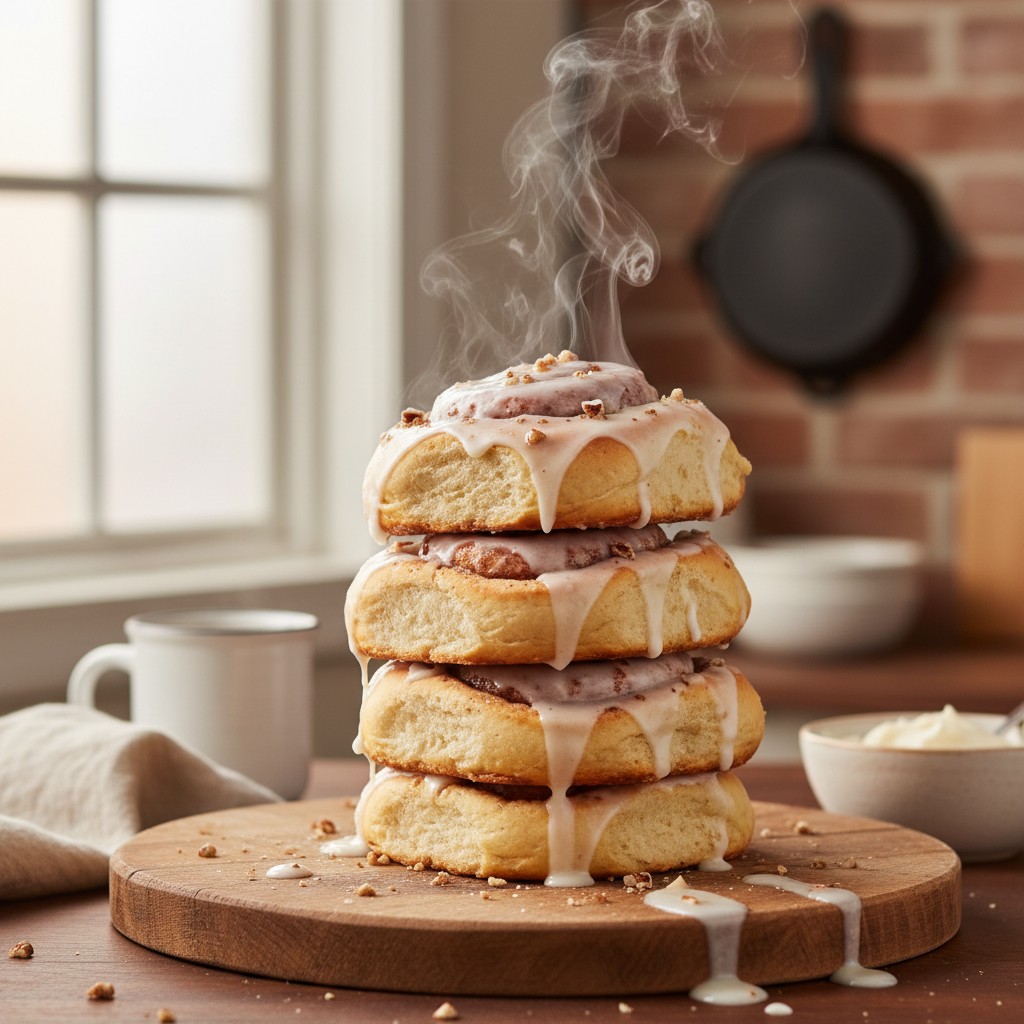
These delightful cinnamon swirls are an absolute joy to bake and even more so to eat, perfect for a weekend breakfast or an afternoon treat. With their soft, spiced centres and glorious cream cheese glaze, they truly are a triumph.
Why You'll Love This Recipe
- The enriched dough, made with butter and egg, creates an incredibly tender and fluffy texture that simply melts in the mouth.
- A generous layer of brown sugar and cinnamon butter ensures every swirl is packed with warm, aromatic spice and a delightful sticky caramelisation.
- The tangy cream cheese glaze provides a perfect counterpoint to the sweetness of the rolls, elevating them to sheer perfection.
Ingredients
- For the Dough:
- 500g strong white bread flour, plus extra for dusting
- 75g caster sugar
- 1 tsp salt
- 7g sachet fast-action dried yeast
- 250ml warm full-fat milk
- 75g unsalted butter, melted and cooled slightly
- 1 large egg, lightly beaten
- For the Filling:
- 100g soft light brown sugar
- 2 tbsp ground cinnamon
- 75g unsalted butter, very soft
- For the Cream Cheese Glaze:
- 100g cream cheese, softened
- 50g unsalted butter, softened
- 150g icing sugar, sifted
- 1 tsp vanilla extract
- 1-2 tbsp full-fat milk
Equipment Needed
Large mixing bowl • Stand mixer with dough hook (optional) • Measuring cups and spoons • Rubber spatula or wooden spoon • Rolling pin • Sharp knife or dental floss • 23x33cm (9x13 inch) baking dish • Wire cooling rack • Whisk or electric hand mixer (for glaze)

Step-by-Step Instructions
- 1. To begin with, combine the strong white bread flour, caster sugar, salt, and fast-action dried yeast in a large mixing bowl. Give it a good stir to ensure everything is well distributed.
- 2. In a separate jug, whisk together the warm milk, melted butter, and beaten egg. Now, pour this liquid mixture into the dry ingredients and mix with a wooden spoon until a shaggy dough forms.
- 3. Turn the dough out onto a lightly floured surface and knead for 8-10 minutes. If you have a stand mixer with a dough hook, this will take about 5-7 minutes on a medium speed. You're looking for a smooth, elastic dough that springs back when gently poked.
- 4. Lightly grease your mixing bowl, place the dough back in, turn it over once to coat, then cover with cling film or a clean tea towel. Leave it in a warm place to prove for 1 to 1½ hours, or until it has doubled in size. This is crucial for a light and airy roll.
- 5. While the dough is proving, prepare the filling. In a small bowl, mix together the soft light brown sugar and ground cinnamon. In another bowl, beat the very soft butter until creamy.
- 6. Once the dough has proved, gently punch it down to release the air. Turn it out onto a lightly floured surface and roll it into a large rectangle, approximately 40cm x 30cm (16 x 12 inches). Try to keep the edges as straight as possible.
- 7. Spread the softened butter evenly over the entire surface of the dough, right to the edges. Then, sprinkle the cinnamon sugar mixture generously over the butter, ensuring an even coating. Don't be shy!
- 8. Starting from one of the longer sides, carefully roll the dough up tightly into a log. Once rolled, gently pinch the seam to seal it. Trim the ends if they are uneven.
- 9. Using a sharp, un-serrated knife or a piece of dental floss, cut the log into 12 equal slices, each about 3-4cm (1½ inches) thick. A piece of dental floss slid underneath and then crossed over the top for cutting makes a beautifully clean cut.
- 10. Arrange the cut rolls in a lightly greased 23x33cm (9x13 inch) baking dish, leaving a little space between them. Cover the dish with cling film or a tea towel and let them prove again in a warm place for another 30-45 minutes, or until they look plump and almost doubled in size.
- 11. Preheat your oven to 180°C (160°C fan/Gas Mark 4) about 15 minutes before the second prove is complete. Bake the rolls for 25-30 minutes, or until they are golden brown on top and cooked through. They should feel light and springy to the touch.
- 12. While the rolls are baking, prepare the cream cheese glaze. In a medium bowl, beat together the softened cream cheese and softened butter until smooth. Gradually add the sifted icing sugar, beating until combined. Stir in the vanilla extract, then add the milk, one tablespoon at a time, until you reach a smooth, pourable, but still thick consistency.
- 13. Once the cinnamon rolls are out of the oven, let them cool in the dish for about 10-15 minutes. This allows them to firm up slightly. Then, generously drizzle or spread the cream cheese glaze over the warm rolls. Serve immediately and enjoy!
- 14. These are best eaten warm, but they are still utterly delicious at room temperature.
How to Store \u0026 Reheat
To keep these rolls at their best, store any leftovers in an airtight container at room temperature for up to 2-3 days. For that 'just baked' experience, gently reheat individual rolls in the microwave for 15-30 seconds, or wrap them loosely in foil and warm in a preheated oven at 150°C (130°C fan/Gas Mark 2) for about 10-15 minutes until soft and warm through. You can also freeze the unbaked rolls after the second prove: place them on a tray in the freezer until solid, then transfer to a freezer-safe bag for up to 1 month. Thaw overnight in the fridge, then bring to room temperature before baking as directed. Baked, unglazed rolls can also be frozen for up to 1 month, then thawed and glazed before serving.
Mary's Secrets to Success
My dear bakers, for truly exceptional cinnamon rolls, remember these little secrets: 1. **Room Temperature Ingredients**: Ensure your milk is warm, but your butter and egg are at room temperature. This helps everything combine smoothly and promotes a good rise. 2. **Don't Rush the Prove**: Yeast needs time and warmth to work its magic. Resist the urge to shorten proving times; patience here is rewarded with beautifully light and airy rolls. 3. **Gentle Handling**: Once the dough has risen, handle it gently when punching down and rolling. You want to retain as much of that lovely airy structure as possible. 4. **Even Thickness**: When rolling out your dough, try to achieve an even thickness across the rectangle. This ensures each roll bakes uniformly and has a consistent swirl. 5. **Quality Butter**: As with all baking, using good quality unsalted butter will make a noticeable difference to the flavour and richness of your finished rolls. It truly is worth it!
Frequently Asked Questions
Why didn't my cinnamon rolls rise properly?
There are a few common reasons, dear. Firstly, check your yeast – ensure it's fresh and not past its expiry date. Secondly, the milk should be warm, not hot, as too much heat can kill the yeast. Lastly, make sure your proving spot is sufficiently warm and draft-free. Patience is a virtue when working with yeast!
Can I prepare these cinnamon rolls the night before?
Absolutely, that's a brilliant idea for a leisurely morning! After shaping and placing the rolls in the baking dish for their second prove, instead of leaving them at room temperature, cover them tightly with cling film and refrigerate overnight (up to 12-18 hours). In the morning, take them out of the fridge and let them come to room temperature and finish proving for about 45-60 minutes before baking as usual.
How do I prevent the filling from oozing out during baking?
A little oozing is quite normal and actually creates a lovely sticky bottom! However, to minimise it, ensure your butter for the filling is very soft, almost spreadable, but not melted. Also, roll the dough up very tightly from one end to the other, pinching the seam well. This helps to contain that glorious filling.
My rolls are a bit dry, what went wrong?
Dry rolls can often be a sign of over-baking. Keep a close eye on them towards the end of the cooking time; they should be golden brown and springy, not hard. Also, ensuring your dough is well-hydrated with the correct amount of milk and egg, and not over-kneaded, will help keep them wonderfully moist.
Can I make these without a stand mixer?
Oh yes, certainly! While a stand mixer can make the kneading process a little easier, these rolls can be made beautifully by hand. Simply knead the dough on a lightly floured surface for 8-10 minutes until it's smooth and elastic. It's a wonderful way to connect with your baking!