Mary Berry Recipes
Slow-Roasted Leg of Lamb with Garlic and Rosemary
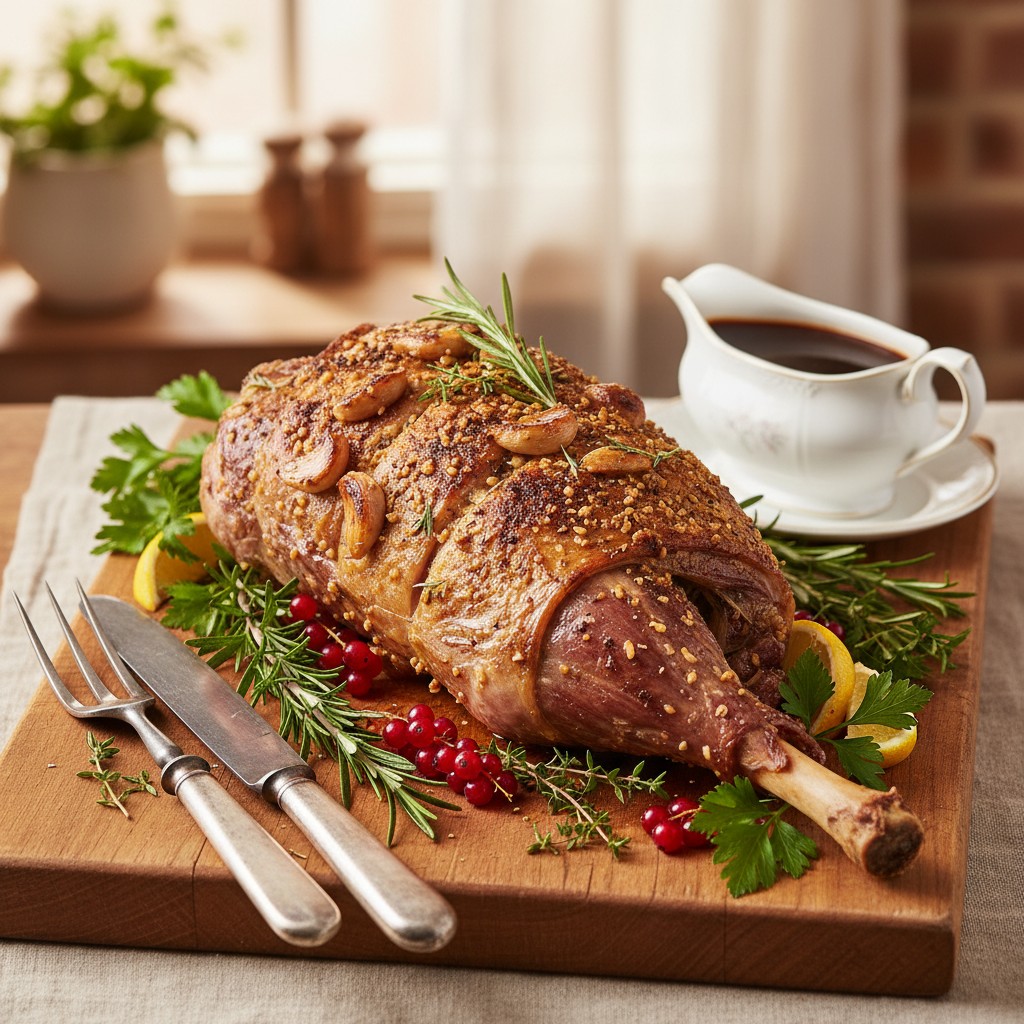
There's such a comforting warmth that fills the kitchen when a slow-roasted leg of lamb is gently cooking away, promising a truly special meal. This recipe ensures beautifully tender, flavourful meat that simply melts in the mouth, a true delight.
Why You'll Love This Recipe
- The low and slow cooking method ensures the lamb becomes incredibly tender and moist, falling off the bone with ease.
- Simple, fresh ingredients like garlic and rosemary infuse the meat deeply, creating a wonderfully aromatic and classic flavour profile.
- It's a wonderfully simple and largely hands-off recipe, leaving you free to prepare accompaniments or simply enjoy the company.
Ingredients
- 2-2.5 kg (4.5-5.5 lb) boned or bone-in leg of lamb
- 3-4 cloves garlic, thinly sliced or crushed
- 4-5 sprigs fresh rosemary, leaves picked and roughly chopped
- 2 tbsp olive oil
- 1 large onion, roughly chopped
- 2 carrots, roughly chopped
- 200ml (7 fl oz) red wine or good quality lamb/beef stock
- Salt and freshly ground black pepper
Equipment Needed
Large roasting tin • Sharp knife • Cutting board • Meat thermometer (optional, but very helpful) • Foil • Saucepan (for gravy) • Fine-mesh sieve (for gravy)

Step-by-Step Instructions
- Preheat your oven to a moderate 160°C (140°C fan/Gas 3). This gentle heat is key to tender lamb.
- Pat the lamb dry with kitchen paper. Using a sharp knife, make several small incisions all over the surface of the lamb. Into these little pockets, push the sliced garlic and some of the chopped rosemary. Rub the remaining rosemary over the lamb.
- Drizzle the lamb generously with olive oil, then season all over with a good sprinkle of salt and plenty of freshly ground black pepper. Don't be shy with the seasoning, it truly enhances the flavour.
- Place the chopped onion and carrots in the bottom of a large roasting tin. These will create a wonderful aromatic bed for the lamb and contribute to a delicious gravy later.
- Place the prepared leg of lamb on top of the vegetables in the roasting tin. Pour the red wine or stock around the lamb, not over it.
- Roast in the preheated oven for 3 to 4 hours. For a bone-in leg, allow about 20-25 minutes per 450g (1 lb), plus an extra 20 minutes. For a boned leg, it might be a little quicker, around 15-20 minutes per 450g. The lamb should be wonderfully tender and easily pierced with a skewer.
- Once cooked to your liking, remove the lamb from the oven. Carefully transfer it to a warm serving platter or carving board. Cover it loosely with foil and let it rest for at least 20-30 minutes. This resting period is absolutely crucial for juicy, tender meat – don't be tempted to skip it!
- While the lamb is resting, you can make a lovely gravy from the pan juices. Strain the juices from the roasting tin into a saucepan, pressing down on the vegetables to extract all the flavour. Skim off any excess fat, then bring to a simmer and thicken with a little cornflour slurry if desired. Season to taste.
- Carve the rested lamb into thick slices and serve immediately with the delicious gravy and your chosen accompaniments. A truly magnificent meal awaits!
How to Store \u0026 Reheat
Any leftover lamb, once completely cooled, can be stored in an airtight container in the refrigerator for up to 3 days. It's utterly delicious served cold in sandwiches with a little mint sauce, or thinly sliced in a salad. To reheat, slice the lamb and place it in an oven-safe dish with a splash of gravy or stock to keep it moist. Cover with foil and warm gently in a moderate oven (160°C/140°C fan/Gas 3) for about 20-30 minutes, or until piping hot. Avoid overheating, as this can dry out the meat.
Mary's Secrets to Success
My dear bakers and cooks, for a truly magnificent slow-roasted lamb, remember these little secrets to success: 1. **Don't Rush the Rest:** That resting period after cooking is non-negotiable! It allows the juices to redistribute throughout the meat, ensuring every slice is wonderfully tender and moist. Patience is a virtue here. 2. **Quality Ingredients:** Start with a good quality leg of lamb and fresh herbs. You truly taste the difference when your ingredients are at their peak. 3. **Trust the Process:** Slow roasting is forgiving. Don't be tempted to keep opening the oven door, just let the gentle heat work its magic. The result will be utterly delicious, I promise you.
Frequently Asked Questions
Can I use a different cut of lamb for this recipe?
Yes, absolutely! While a leg of lamb is traditional, a boneless lamb shoulder or even a smaller joint would work beautifully with this slow roasting method. The cooking times may vary slightly, so do keep an eye on it, but the principle of low and slow heat for tenderness remains the same. It's a very forgiving technique, so don't be afraid to experiment a little.
How do I make a good gravy from the pan drippings?
After removing the lamb to rest, carefully strain the juices from the roasting tin into a saucepan, pressing down on the cooked vegetables to extract all those lovely flavours. Skim off any excess fat. For a thicker gravy, you can whisk in a tablespoon of plain flour or cornflour mixed with a little cold water (a slurry) into the simmering juices, stirring until thickened. Season to taste with salt and pepper. It's wonderfully simple and so much more flavourful than a packet mix!
How do I know when the lamb is perfectly cooked and tender?
For truly tender, pull-apart lamb, you're aiming for an internal temperature of around 80-85°C (175-185°F) if you're using a meat thermometer, inserted into the thickest part without touching the bone. However, with slow roasting, it's often more about the texture; the meat should feel very tender when pierced with a skewer or fork, almost falling apart. Trust your senses here – a little patience yields truly succulent results.
Can I prepare the lamb ahead of time?
Yes, indeed! You can certainly prepare the lamb by making the incisions, stuffing with garlic and rosemary, and rubbing it with olive oil, salt, and pepper the night before. Cover it well and refrigerate. This allows the flavours to really penetrate the meat. Remember to take it out of the fridge about an hour before you plan to roast it, allowing it to come closer to room temperature for more even cooking.
My lamb isn't getting a nice brown crust, what can I do?
Slow roasting is primarily designed to achieve exceptional tenderness rather than a crisp exterior, unlike some other roasting methods. However, if you'd like a little more colour, you can increase the oven temperature to 200°C (180°C fan/Gas 6) for the last 20-30 minutes of cooking, keeping a very close eye on it to prevent burning. Alternatively, a quick sear of the lamb in a hot pan with a little oil on all sides before it goes into the oven can help to develop a lovely initial crust.