Mary Berry Recipes
Traditional Royal Icing for Classic Cakes
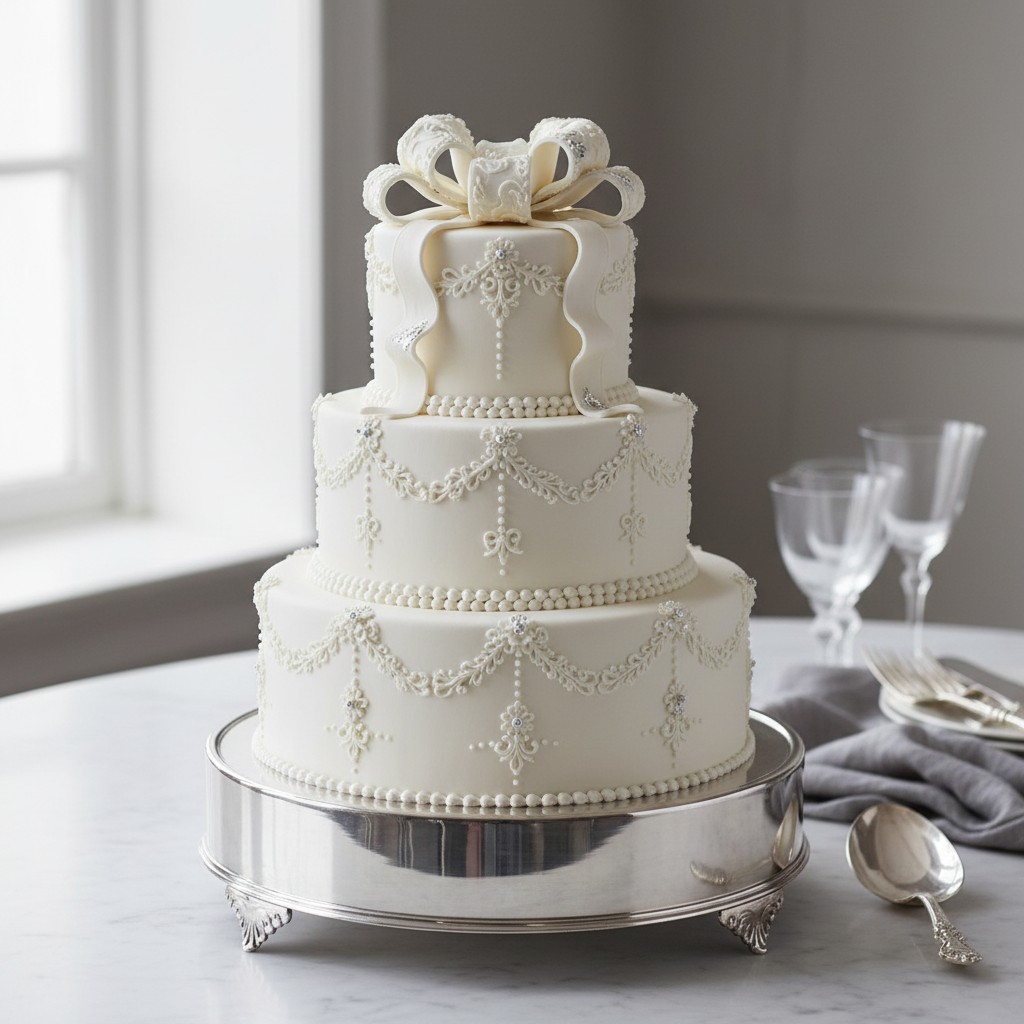
My dears, a beautifully made royal icing is the crowning glory for so many celebratory bakes. This recipe is wonderfully simple, ensuring your decorations hold their shape and look absolutely pristine.
Why You'll Love This Recipe
- This recipe yields a wonderfully stable icing that sets firm, perfect for intricate piping and a long-lasting finish.
- The addition of lemon juice not only brightens the flavour but also helps the icing set beautifully firm and shiny.
- It's incredibly versatile; you can easily adjust the consistency for different decorating techniques, from flood icing to delicate details.
Ingredients
- 3 large egg whites (about 90g), at room temperature
- 450g (1lb) icing sugar, sifted
- 1-2 tsp fresh lemon juice
- 1/2 tsp liquid glycerine (optional, for a softer set and improved texture)
Equipment Needed
Large mixing bowl • Electric stand mixer with whisk attachment (or hand whisk) • Sieve • Spatula or palette knife

Step-by-Step Instructions
- Begin by ensuring your mixing bowl and whisk are absolutely spotless and grease-free. Any trace of grease can prevent your egg whites from whisking correctly, and we want sheer perfection!
- Place the egg whites into a large mixing bowl. If using a stand mixer, fit it with the whisk attachment. If whisking by hand, prepare for a good arm workout, my dears!
- Gradually add the sifted icing sugar to the egg whites, about a tablespoon at a time, whisking gently on a low speed or by hand until combined. Don't be tempted to add it all at once, as you'll end up in a sugary cloud!
- Once all the icing sugar is incorporated, increase the speed to medium-high and whisk for about 5-7 minutes. You're looking for a thick, glossy, and firm icing that holds stiff peaks. When you lift the whisk, the peak should stand proudly.
- Now, gently stir in 1 teaspoon of the lemon juice. This helps to whiten the icing and aids in setting. If you prefer a slightly thinner consistency for spreading, you can add the second teaspoon of lemon juice, or even a tiny drop more, bit by bit, until you reach your desired texture.
- If you're using glycerine, stir in half a teaspoon now. This lovely ingredient helps prevent the icing from becoming too hard and brittle, giving it a slightly softer bite, which is often preferred for eating.
- Before using, always cover the surface of the royal icing directly with a piece of damp kitchen paper or cling film to prevent it from drying out and forming a crust. This is a very important step, my dears, for smooth results!
- Your royal icing is now ready to use for piping, spreading, or flooding. Adjust the consistency as needed for your chosen decoration technique by adding a tiny amount more icing sugar for stiffness or a few drops of lemon juice or water for thinning.
How to Store \u0026 Reheat
Once made, royal icing can be stored in an airtight container in the refrigerator for up to 3-5 days. Always ensure the surface is covered directly with cling film or damp kitchen paper to prevent a crust from forming. Before using again, give it a good stir with a spatula; you might need to add a few drops of water or lemon juice to restore the perfect consistency. Royal icing is not suitable for freezing, my dears, as it separates upon thawing.
Mary's Secrets to Success
The secret to truly beautiful royal icing is in the preparation, my dears. Always ensure your bowl and whisk are impeccably clean and grease-free – any oil will prevent the egg whites from stiffening properly. When adding the icing sugar, do so gradually and sift it thoroughly to avoid any lumps, which can clog your piping bag later. And remember, consistency is key! Don't be afraid to adjust it with a tiny drop of water or a little more icing sugar until it's just right for your chosen task. And finally, always keep any unused icing covered directly with cling film to prevent it from crusting over. Happy decorating!
Frequently Asked Questions
How do I achieve different royal icing consistencies?
For stiff piping work, like intricate details or flowers, you'll want a very firm icing that holds its shape without drooping. For outlining and 'run-out' work (flooding), gradually add a few drops of water or lemon juice at a time, stirring well, until the icing is a little thinner. It should flow slowly off a spoon and settle back into itself within 10-15 seconds. For spreading a smooth layer, aim for a consistency that is easy to spread with a palette knife but still firm enough not to drip off the cake.
Can I make royal icing ahead of time?
Yes, you certainly can! Royal icing can be made up to 3-5 days in advance. Store it in an airtight container in the refrigerator, ensuring the surface is covered directly with cling film or a piece of damp kitchen paper to prevent it from drying out. Give it a good stir before use, and adjust the consistency with a few drops of water or lemon juice if needed.
Why is my royal icing cracking after it dries?
Cracking often occurs if the icing is applied too thickly, or if it dries too quickly. To avoid this, try to apply it in thinner, more even layers. Also, ensure your cake or biscuits are completely cool before icing. If you've used glycerine, it helps to keep the icing a little more pliable and less prone to cracking.
Is it safe to use raw egg whites in royal icing?
For those concerned about using raw egg whites, especially for vulnerable individuals, pasteurised egg whites (available in cartons) or meringue powder are excellent and safe alternatives. My traditional recipe uses fresh egg whites, which when handled correctly and consumed within a reasonable timeframe, are perfectly fine for most people.
What if I don't have fresh lemons for the juice?
While fresh lemon juice adds a lovely flavour and aids in setting, you can substitute it with a tiny dash (about 1/4 teaspoon) of white vinegar or cream of tartar mixed with a tablespoon of water. The acidity helps achieve the desired texture and whiteness, though the flavour profile will be slightly different.