Mary Berry Recipes
Classic Raspberry Pavlova with a Berry Compote
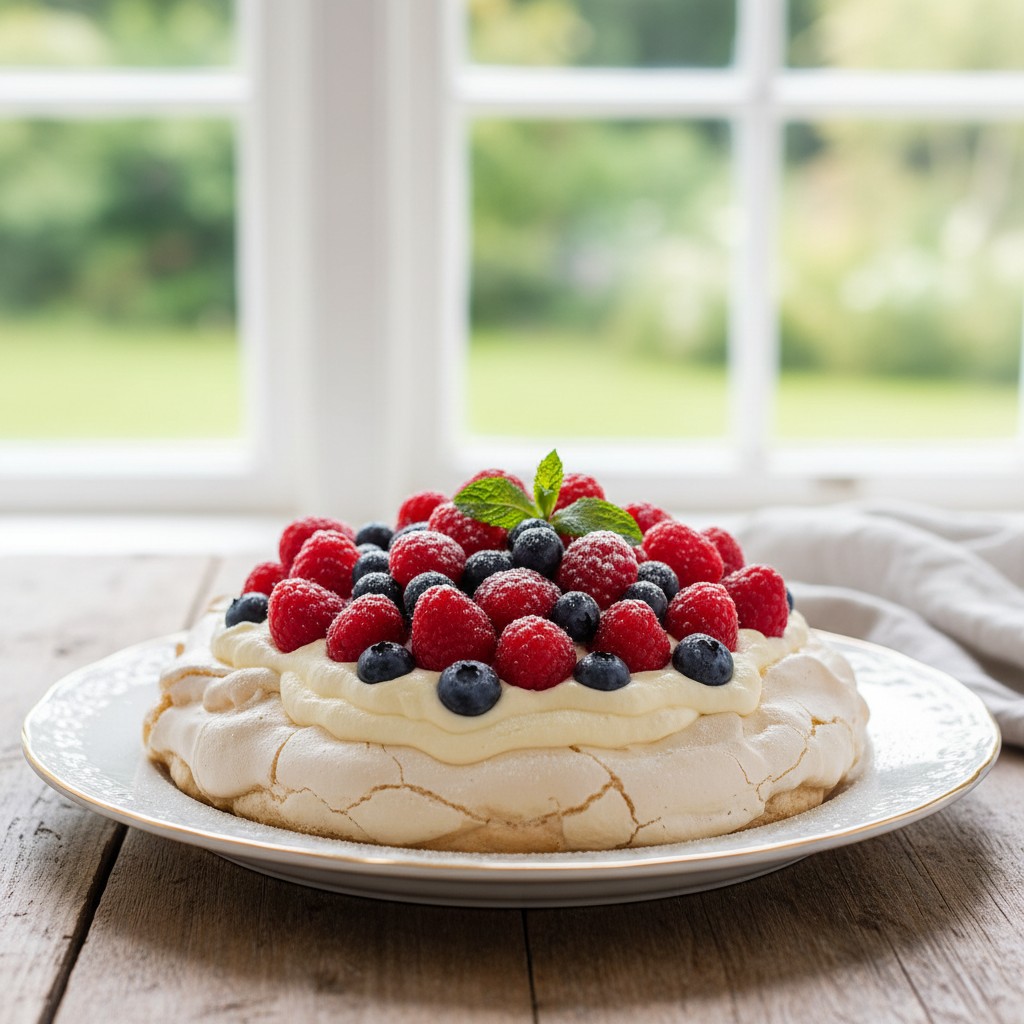
Oh, a beautifully crisp yet chewy pavlova is a true delight, isn't it? This recipe for raspberry pavlova is wonderfully simple and yields sheer perfection every time, making it a firm family favourite.
Why You'll Love This Recipe
- Achieves that coveted crisp exterior and soft, chewy interior.
- The balance of sweet meringue with tart fruit is simply divine.
- Visually stunning, making it perfect for entertaining or a special treat.
- Naturally gluten-free, suitable for many dietary needs.
- A truly classic recipe that never goes out of style.
Ingredients
- 6 large egg whites (at room temperature)
- 300g caster sugar
- 2 tsp cornflour
- 1 tsp white wine vinegar
- 1 tsp vanilla extract
- 600ml double cream
- 2 tbsp icing sugar (optional, to taste)
- 300g fresh raspberries
- 150g mixed berries (strawberries, blueberries, redcurrants) for garnish (optional)
- Fresh mint leaves, for garnish (optional)
Equipment Needed
Large mixing bowl (preferably metal or glass) • Electric stand mixer with whisk attachment, or electric hand whisk • Large baking tray • Baking parchment paper • Pencil (for drawing circle) • Large metal spoon or rubber spatula • Serving plate

Step-by-Step Instructions
- Preheat your oven to 150°C (130°C fan/Gas Mark 2). Line a large baking tray with baking parchment. Draw a 23cm (9-inch) circle on the parchment paper using a pencil, then turn the paper over so the pencil mark is underneath.
- Ensure your mixing bowl and whisk are scrupulously clean and free from any grease – this is crucial for successful meringue! Separate your eggs carefully, making sure no yolk gets into the whites.
- Place the egg whites into the clean bowl of a stand mixer fitted with a whisk attachment (or use an electric hand whisk). Whisk on medium speed until the whites form soft peaks.
- With the mixer still running, gradually add the caster sugar, one tablespoon at a time, incorporating each spoonful fully before adding the next. This slow addition helps the sugar dissolve properly and creates a stable, glossy meringue. Continue whisking until the meringue is very stiff and shiny, and when you rub a little between your fingers, you can't feel any sugar crystals. This process might take 8-10 minutes.
- Gently fold in the cornflour, white wine vinegar, and vanilla extract using a large metal spoon or spatula. Be careful not to knock out too much air.
- Spoon the meringue onto the prepared baking parchment, using the drawn circle as a guide. Shape it into a neat round, creating a slight dip in the centre to hold the cream and fruit, and gently swirl the sides upwards to create an attractive edge.
- Transfer the baking tray to the preheated oven and immediately reduce the temperature to 120°C (100°C fan/Gas Mark ½). Bake for 1 hour 30 minutes.
- After 1 hour 30 minutes, turn off the oven but leave the pavlova inside with the door ajar (you can prop it open with a wooden spoon) to cool completely. This slow cooling prevents cracking and helps maintain its crispness. This could take several hours, or even overnight.
- Once completely cool, gently transfer the meringue shell to a serving plate.
- To prepare the topping, whisk the double cream in a separate bowl until soft peaks form. If you prefer a sweeter cream, you can whisk in the icing sugar at this stage.
- Spoon the whipped cream into the centre of the cooled meringue shell.
- Arrange the fresh raspberries and any other mixed berries attractively on top of the cream. Garnish with fresh mint leaves, if desired.
- Serve immediately and enjoy this truly delightful dessert!
How to Store \u0026 Reheat
The meringue shell can be made up to 2-3 days in advance and stored in an airtight container in a cool, dry place. Do not refrigerate the meringue shell, as it can absorb moisture and become sticky. Once assembled with cream and fruit, pavlova is best eaten immediately. If you do have any leftovers, store them in the refrigerator, but be aware that the meringue will soften over time. It doesn't reheat well, as its charm lies in the contrast of crisp and soft textures, which would be lost.
Mary's Secrets to Success
For a truly perfect pavlova, remember these golden rules: always use a spotlessly clean, grease-free bowl. Room temperature egg whites whip up much more easily and to a greater volume. Add your caster sugar very gradually, a tablespoon at a time, and ensure it's fully dissolved before adding more – this is key for a stable, shiny meringue. And finally, patience is a virtue! Allow your pavlova to cool completely in the oven with the door ajar. This prevents cracking and gives you that wonderful crisp exterior and soft interior. You'll be delighted with the results!
Frequently Asked Questions
My meringue cracked, what went wrong?
Ah, cracking can happen for a few reasons, my dear. Often, it's due to too rapid a change in temperature. Always ensure you reduce the oven temperature after the initial bake, and crucially, leave the pavlova to cool completely inside the oven with the door ajar. This gradual cooling process helps prevent those pesky cracks and ensures a beautifully stable meringue.
Can I make the meringue ahead of time?
Absolutely, and I often recommend it! The meringue shell can be baked up to 2 or even 3 days in advance. Once it's completely cooled, store it in an airtight container in a cool, dry place, away from any moisture. Then, simply assemble with the cream and fruit just before serving for sheer perfection.
Why do you add cornflour and vinegar to the meringue?
That's a very good question! The cornflour and white wine vinegar are little secrets to success. The cornflour helps to create that lovely, soft, marshmallowy centre, while the vinegar assists in stabilising the egg whites and also contributes to that delightful chewy texture. They're both vital for achieving the perfect pavlova.
What can I do with the leftover egg yolks?
Oh, never waste those precious yolks! They're wonderful for making a rich crème brûlée, a luxurious hollandaise sauce, or a batch of homemade custard. You could also use them to enrich a quiche or a pasta carbonara. There are so many delicious possibilities!
My meringue isn't getting stiff peaks, what should I do?
The most common culprit here, my dear, is often a trace of grease. Even a tiny speck of egg yolk or fat on your bowl or whisk can prevent the egg whites from whisking properly. Ensure your equipment is scrupulously clean. Also, make sure your egg whites are at room temperature, as they whisk up much better than cold ones. Keep whisking, be patient, and it should come good!