Mary Berry Recipes
Simply Perfect Lemon Curd
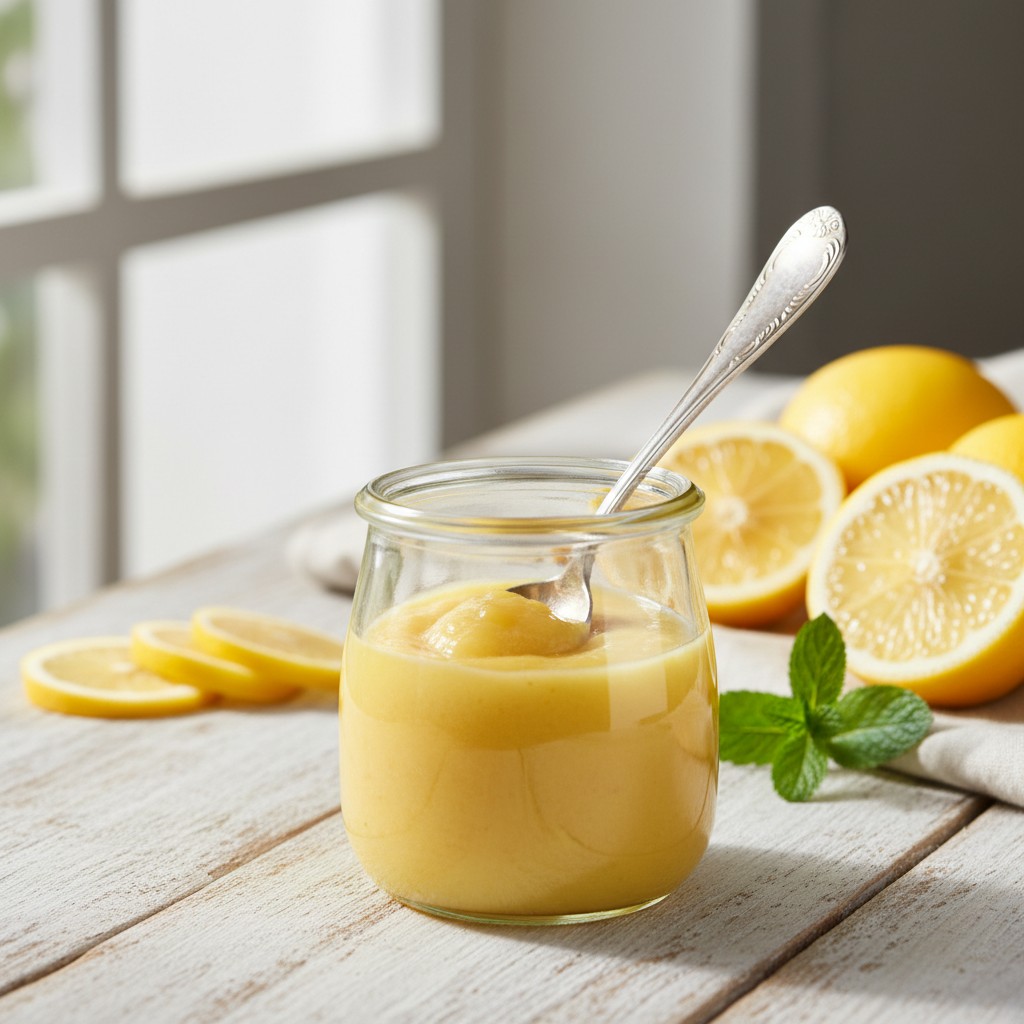
This vibrant lemon curd is a truly delightful treat, bursting with zesty flavour and a silken texture. It's a wonderfully simple recipe that brings a touch of sunshine to any occasion.
Why You'll Love This Recipe
- Achieves a beautifully smooth and thick consistency without fuss.
- Balances sweetness and tartness perfectly for a truly refreshing flavour.
- Uses simple, readily available ingredients for a superior homemade taste.
Ingredients
- 4 large free-range eggs
- 2 large free-range egg yolks
- 200g caster sugar
- 150ml freshly squeezed lemon juice (from 3-4 large lemons)
- Zest of 2 large lemons (finely grated)
- 100g unsalted butter, cut into cubes
Equipment Needed
Medium saucepan • Heatproof bowl (glass or stainless steel, to fit over saucepan) • Whisk • Fine-mesh sieve (optional) • Sterilised jars with lids

Step-by-Step Instructions
- Prepare the double boiler: Fill a medium saucepan with about 2-3 inches of water and bring it to a gentle simmer over medium heat. Ensure the bowl you'll be using sits comfortably on top without touching the water.
- Combine ingredients: In a heatproof bowl (preferably glass or stainless steel), whisk together the whole eggs, egg yolks, and caster sugar until well combined and slightly pale.
- Add lemon: Stir in the freshly squeezed lemon juice and the finely grated lemon zest.
- Cook gently: Place the bowl over the simmering saucepan (the double boiler). Make sure the bottom of the bowl does not touch the water. Continuously whisk the mixture gently but steadily.
- Thicken the curd: Continue whisking for 10-15 minutes, or until the mixture thickens significantly, coating the back of a spoon and leaving a clear path when you draw your finger across it. Be patient; it will thicken. Do not let it boil, as this can curdle the eggs.
- Incorporate butter: Remove the bowl from the heat. Add the cubed unsalted butter, one piece at a time, whisking vigorously until each piece is fully melted and incorporated, making the curd beautifully glossy and smooth.
- Strain (optional but recommended): For an extra-silken finish, pass the warm curd through a fine-mesh sieve into a clean bowl or directly into sterilised jars. This removes any tiny bits of cooked egg or zest, though I rather like the flecks of zest myself!
- Cool and store: Allow the lemon curd to cool completely before covering and refrigerating. It will thicken further as it cools.
How to Store \u0026 Reheat
Store your homemade lemon curd in sterilised, airtight jars in the refrigerator for up to 2-3 weeks. Always ensure the curd is completely cool before sealing the jars. It does not freeze particularly well as the texture can become grainy upon thawing due to the eggs. Serve chilled or at room temperature. There's no need to reheat it; simply take it out of the fridge a little while before serving to allow it to soften slightly if preferred.
Mary's Secrets to Success
The secret to a truly glorious lemon curd lies in patience and gentle heat. Never be tempted to rush the cooking process over too high a flame, as this will scramble your eggs! A constant, gentle whisk is your best friend here. And remember, freshly squeezed lemon juice and zest truly make all the difference – it’s worth the effort for that vibrant, authentic flavour. For gifting, pour the cooled curd into pretty, sterilised jars and tie with a ribbon; it makes a truly thoughtful present!
Frequently Asked Questions
Why is my lemon curd too runny?
This usually means it hasn't cooked long enough, or the heat wasn't consistent. Ensure you cook it over a gentle simmer, constantly whisking, until it coats the back of a spoon and holds its shape. Patience is key!
Can I use bottled lemon juice?
While fresh lemon juice provides the absolute best flavour and zest, you can use good quality bottled lemon juice in a pinch. However, do ensure you still use fresh lemon zest for that essential aromatic lift.
My curd looks lumpy or curdled, what went wrong?
This often happens if the heat is too high, causing the eggs to cook too quickly. Keep the heat gentle and whisk continuously. If it does become slightly lumpy, you can try whisking it vigorously off the heat, or even blending it with an immersion blender for a very brief moment, then passing it through a fine sieve.
How do I sterilise my jars?
Wash jars and lids in hot, soapy water, rinse well. Place jars on a baking tray in a cold oven, then heat to 130°C (110°C fan/Gas 1) for 15 minutes. Boil lids in water for 5 minutes. Let them dry completely before filling.
Can I reduce the sugar content?
You can, but be mindful that sugar plays a role in the curd's texture and shelf life, not just sweetness. Reducing it too much might make the curd less stable and more tart. I find this recipe's balance to be just right for most palates.