Mary Berry Recipes
Mary Berry's Classic Beef Lasagne
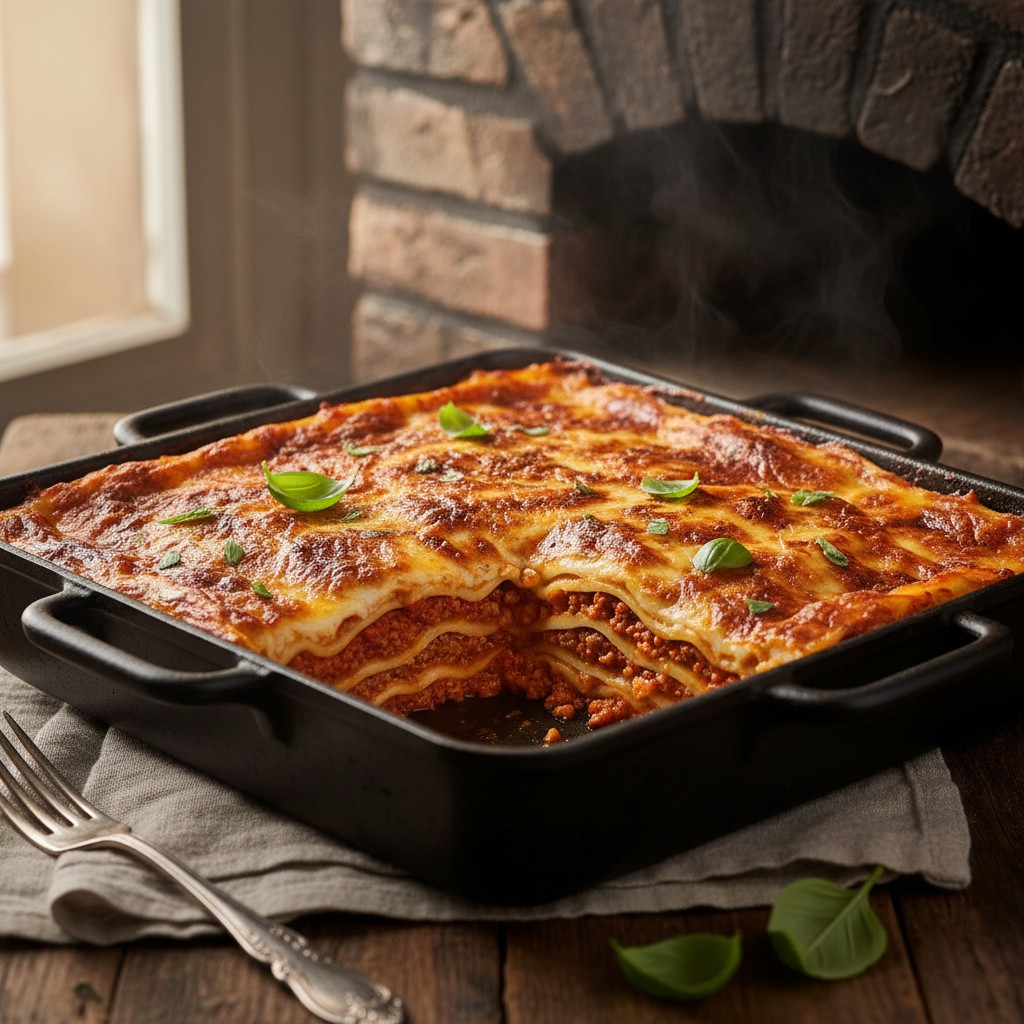
There's nothing quite like a beautifully baked lasagne to bring everyone to the table, and this recipe delivers sheer perfection every time. With rich flavours and comforting textures, it's a dish that truly nourishes the soul.
Why You'll Love This Recipe
- The slow-simmered beef ragu develops deep, complex flavours that are simply irresistible.
- Our homemade béchamel sauce is wonderfully creamy and perfectly seasoned, providing a luxurious contrast to the robust meat.
- Careful layering ensures a balanced bite in every mouthful, with tender pasta, rich sauce, and glorious cheese melding together beautifully.
Ingredients
- FOR THE MEAT SAUCE (RAGU):
- 2 tbsp olive oil
- 1 large onion, finely chopped
- 2 cloves garlic, crushed
- 2 carrots, finely diced
- 2 celery sticks, finely diced
- 750g lean beef mince
- 150ml red wine (optional, but adds depth)
- 2 x 400g cans chopped tomatoes
- 2 tbsp tomato purée
- 1 tsp dried oregano
- 2 bay leaves
- 200ml beef stock
- Salt and freshly ground black pepper to taste
- FOR THE BÉCHAMEL SAUCE:
- 75g unsalted butter
- 75g plain flour
- 1 litre full-fat milk, warmed
- ½ tsp freshly grated nutmeg
- Salt and freshly ground black pepper to taste
- FOR ASSEMBLY:
- 12-15 sheets dried lasagne pasta (no pre-cooking needed for most brands, check packet)
- 150g mozzarella cheese, grated
- 50g Parmesan cheese, freshly grated, plus extra for serving
Equipment Needed
Large, heavy-based saucepan or deep frying pan • Medium saucepan • Whisk • Wooden spoon • Grater • Large ovenproof dish (approx. 30x20cm) • Measuring jugs and spoons

Step-by-Step Instructions
- Begin by preparing the rich meat sauce. Heat the olive oil in a large, heavy-based saucepan or a deep frying pan over a medium heat. Add the chopped onion, carrots, and celery, and cook gently for about 8-10 minutes until softened but not browned. This slow start builds a wonderful flavour base.
- Add the crushed garlic and cook for another minute until fragrant. Now, crumble in the beef mince, breaking it up with a wooden spoon. Increase the heat slightly and brown the mince thoroughly, stirring occasionally, until no pink remains. Drain off any excess fat if necessary.
- If using, pour in the red wine and bring it to a simmer, allowing it to bubble for a few minutes until it has reduced by about half. This deepens the flavour beautifully.
- Stir in the chopped tomatoes, tomato purée, dried oregano, bay leaves, and beef stock. Bring the sauce to a gentle boil, then reduce the heat to a very low simmer, cover, and cook for at least 1 hour, or up to 1 hour 30 minutes, stirring occasionally. The longer it simmers, the richer the flavour. Season generously with salt and pepper.
- While the meat sauce is simmering, prepare the béchamel sauce. Melt the butter in a separate medium saucepan over a medium heat. Once melted, stir in the flour and cook for 1-2 minutes, stirring constantly, to create a smooth roux.
- Gradually whisk in the warmed milk, a little at a time, ensuring each addition is fully incorporated before adding more. Continue whisking until the sauce is smooth and thick. Bring it to a gentle simmer, then cook for another 2-3 minutes, stirring, until it coats the back of a spoon. Season with nutmeg, salt, and pepper. Remove from the heat and set aside, covering the surface with cling film to prevent a skin from forming.
- Preheat your oven to 180°C (160°C fan/Gas Mark 4).
- Now for the joyful assembly! Spoon a thin layer of the meat sauce over the base of a large, ovenproof dish (approximately 30x20cm).
- Lay a single layer of lasagne sheets over the meat sauce. You may need to break some to fit, ensuring the base is covered.
- Spoon a generous layer of the meat sauce over the pasta, followed by a layer of béchamel sauce. Sprinkle with a little grated mozzarella and Parmesan.
- Repeat the layers: pasta, meat sauce, béchamel, and cheese, until all the ingredients are used, finishing with a final layer of pasta topped generously with béchamel sauce and a good sprinkling of both mozzarella and Parmesan cheese.
- Bake in the preheated oven for 45-55 minutes, or until the top is golden brown and bubbling beautifully, and the pasta is tender. If the top is browning too quickly, you can cover it loosely with foil.
- Once baked to sheer perfection, remove the lasagne from the oven and allow it to rest for 10-15 minutes before serving. This allows the layers to settle and makes for easier, neater serving. Serve with a crisp green salad and some crusty bread.
- Enjoy this wonderfully comforting classic, my dears!
How to Store \u0026 Reheat
Leftover lasagne can be stored in an airtight container in the refrigerator for up to 3 days. To reheat, place individual portions in the microwave until piping hot, or cover the entire dish loosely with foil and reheat in a preheated oven at 160°C (140°C fan/Gas Mark 3) for 20-30 minutes, or until thoroughly heated through. Lasagne freezes wonderfully! Once completely cooled, cut into individual portions and wrap well in cling film and then foil, or place in freezer-safe containers. Freeze for up to 3 months. Thaw overnight in the refrigerator before reheating as above.
Mary's Secrets to Success
For a truly exceptional meat sauce, take your time simmering it. The longer it gently bubbles away, the more the flavours will meld and deepen – aim for at least an hour, but an hour and a half is even better. Don't be tempted to rush the béchamel either; cooking out the flour properly ensures no raw flour taste. And finally, always allow your finished lasagne to rest for 10-15 minutes after baking. This is crucial for allowing the layers to settle and making it much easier to cut and serve beautifully. It truly makes all the difference!
Frequently Asked Questions
Can I make this lasagne ahead of time?
Absolutely, my dear! You can assemble the entire lasagne up to 24 hours in advance. Cover it tightly with cling film and keep it in the refrigerator. When you're ready to bake, allow it to come to room temperature for about 30 minutes before placing it in the oven, and you may need to add an extra 10-15 minutes to the baking time.
How can I prevent my lasagne from being watery?
A watery lasagne can be rather disappointing! The key here is to ensure your meat sauce is reduced sufficiently – it should be thick and rich, not soupy. Also, allow your béchamel to thicken properly. If using fresh pasta, ensure it's not overly wet. And crucially, allow the baked lasagne to rest for 10-15 minutes before serving; this allows the sauces to set and prevents them from running.
What's the best type of lasagne pasta to use?
I always recommend using good quality dried lasagne sheets that state 'no pre-cooking required' on the packet. They absorb the lovely sauces beautifully as they bake, becoming perfectly tender. If you prefer, fresh pasta sheets can also be used, but do check their specific cooking instructions as they often cook more quickly.
Can I add vegetables to the meat sauce?
Indeed you can! Besides the classic onion, carrot, and celery, finely diced mushrooms, courgettes, or peppers can be lovely additions. Simply sauté them with the initial vegetables to soften before adding the mince. It's a wonderful way to add extra goodness and flavour.
My béchamel sauce has lumps. How can I fix it?
Oh dear, a lumpy béchamel can be a bit vexing! The trick is to whisk vigorously and add the milk gradually. If you do find yourself with lumps, don't despair! You can often remove the pan from the heat and whisk vigorously until smooth. If they persist, pass the sauce through a fine-mesh sieve, pressing out any lumps, and then gently reheat. It will be perfectly smooth in the end!