Mary Berry Recipes
Classic Baked Vanilla Custard Tart
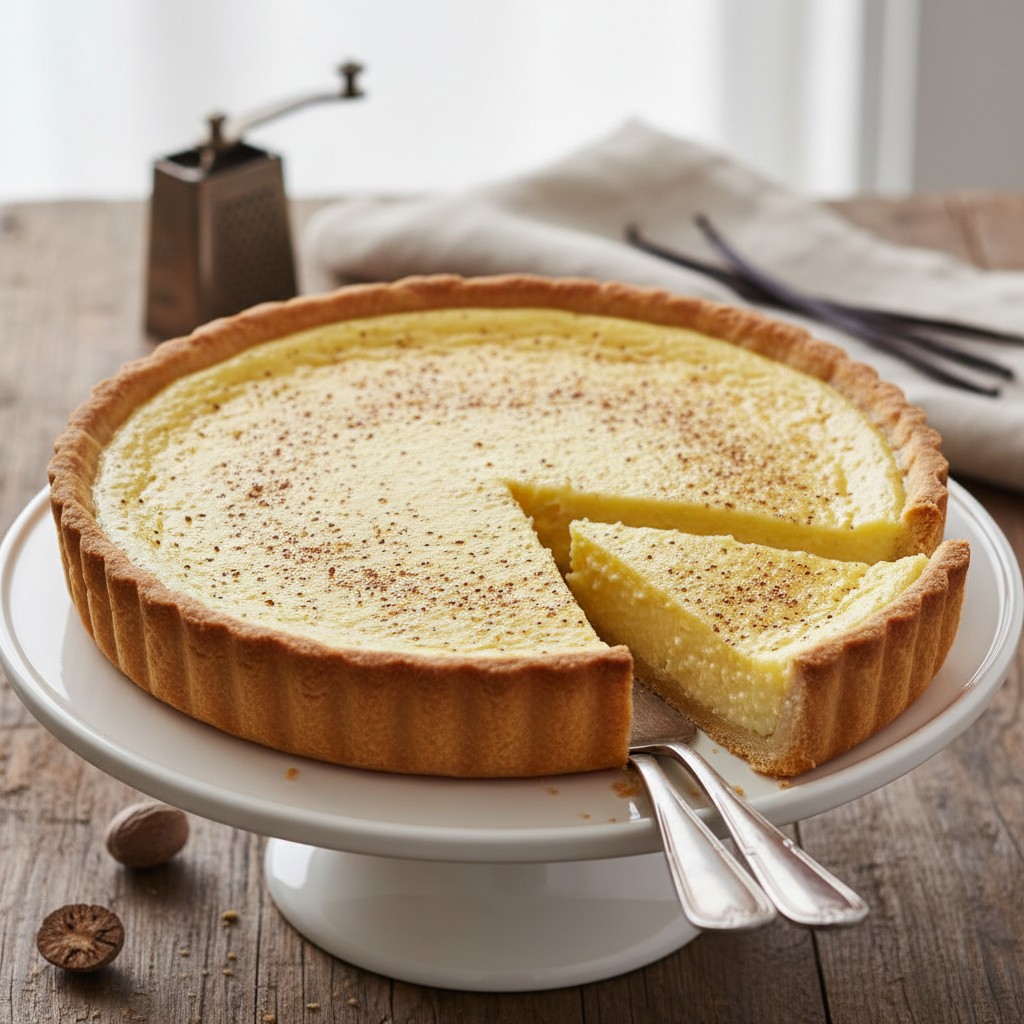
There's nothing quite like a beautifully baked custard tart, is there? This recipe, a true British classic, promises a silky smooth filling encased in crisp, golden pastry, perfect for any occasion.
Why You'll Love This Recipe
- Uses a classic sweet shortcrust pastry for a perfect, crisp base.
- The custard achieves a delicate, wobbly set without being overcooked, ensuring a silky texture.
- It's a timeless, comforting dessert that appeals to all ages and is a true British classic.
Ingredients
- For the Sweet Shortcrust Pastry:
- 225g (8oz) plain flour, plus extra for dusting
- 50g (2oz) icing sugar
- 125g (4½oz) unsalted butter, chilled and diced
- 1 large egg yolk
- 1-2 tbsp cold water
- For the Custard Filling:
- 300ml (10fl oz) full-fat milk
- 300ml (10fl oz) double cream
- 1 tsp vanilla extract
- 3 large egg yolks
- 1 large whole egg
- 75g (2¾oz) caster sugar
- Freshly grated nutmeg, for dusting
Equipment Needed
Large mixing bowl • 23cm (9 inch) fluted tart tin with a removable base • Rolling pin • Baking parchment • Ceramic baking beans or dried pulses • Saucepan • Whisk • Fine-mesh sieve • Jug

Step-by-Step Instructions
- 1. Start with the Pastry: Sift the plain flour and icing sugar into a large mixing bowl. Add the chilled, diced butter. Using your fingertips, rub the butter into the flour until the mixture resembles fine breadcrumbs. This step is crucial for a tender pastry, so work quickly to keep the butter cold.
- 2. Bind the Dough: Add the egg yolk and one tablespoon of cold water. Mix with a round-bladed knife until the dough just comes together. If it's too dry, add the second tablespoon of water, a little at a time. Be careful not to overwork the dough, as this can make it tough.
- 3. Chill the Pastry: Lightly knead the dough on a floured surface until smooth. Shape it into a disc, wrap it in cling film, and chill in the refrigerator for at least 30 minutes. This allows the gluten to relax, preventing shrinkage during baking.
- 4. Roll and Line: On a lightly floured surface, roll out the chilled pastry to a thickness of about 3mm (⅛ inch). Use it to line a 23cm (9 inch) fluted tart tin with a removable base. Gently press the pastry into the sides of the tin, ensuring there are no air pockets. Trim the edges neatly.
- 5. Blind Bake the Pastry: Prick the base all over with a fork. Line the pastry case with baking parchment and fill with ceramic baking beans or dried pulses. Bake in a preheated oven at 180°C (160°C fan/Gas Mark 4) for 15 minutes. Remove the beans and parchment, then return the pastry to the oven for another 5-7 minutes until lightly golden and dry. This helps prevent a soggy bottom! Reduce the oven temperature to 150°C (130°C fan/Gas Mark 2).
- 6. Prepare the Custard: While the pastry is blind baking, gently heat the milk, double cream, and vanilla extract in a saucepan over a medium heat until just simmering – do not boil. Remove from the heat.
- 7. Whisk the Eggs: In a separate bowl, whisk together the egg yolks, whole egg, and caster sugar until pale and well combined.
- 8. Combine and Strain: Gradually pour the warm milk mixture over the egg mixture, whisking constantly to prevent the eggs from scrambling. Strain the custard mixture through a fine-mesh sieve into a jug. This removes any lumps and ensures a perfectly smooth custard.
- 9. Fill and Bake: Carefully pour the strained custard into the blind-baked pastry case. Grate a generous amount of fresh nutmeg over the surface.
- 10. Bake Gently: Return the tart to the oven (now at 150°C/130°C fan/Gas Mark 2) and bake for 25-30 minutes, or until the custard is just set with a slight wobble in the centre when gently shaken. Overbaking will result in a rubbery custard.
- 11. Cool and Serve: Remove the tart from the oven and allow it to cool completely in the tin on a wire rack. This is crucial for the custard to fully set and for the pastry to remain crisp. Once cool, carefully remove from the tin. Slice and serve.
How to Store \u0026 Reheat
Once completely cooled, the custard tart can be stored in an airtight container in the refrigerator for up to 2-3 days. It is best enjoyed at room temperature or slightly chilled, as reheating can affect the delicate texture of the custard. If you must, a very gentle warming in a low oven (around 100°C/210°F) for 10-15 minutes might be possible, but be wary of overcooking the custard. Freezing is not recommended as the custard's texture will likely become watery upon thawing.
Mary's Secrets to Success
My dear bakers, remember these little secrets for a truly magnificent custard tart: 1. **Keep it Cold:** For the flakiest pastry, ensure your butter is very cold and handle the dough as little as possible. This prevents the butter from melting and keeps your pastry beautifully short. 2. **Gentle Heat:** When heating the milk and cream, bring it just to a simmer, not a rolling boil. And when baking the custard, a low oven temperature is key to a slow, even set, preventing cracks and curdling. Patience is a virtue in baking! 3. **The Wobble Test:** Don't be tempted to overbake! The custard should still have a slight wobble in the very centre when it comes out of the oven. It will firm up perfectly as it cools. This ensures that wonderfully delicate, creamy texture.
Frequently Asked Questions
How do I prevent a "soggy bottom" on my tart?
Ah, the dreaded soggy bottom! The key here is thorough blind baking. Ensure you bake the pastry case until it's truly dry and lightly golden, not just set. Using baking beans and then removing them for a final bake helps crisp up the base beautifully. Also, make sure your filling isn't too wet when it goes into the pastry.
My custard cracked after baking, what went wrong?
A cracked custard often indicates it's been overbaked. The custard should be just set with a gentle wobble in the very centre when you remove it from the oven. It will continue to set as it cools. Keep a close eye on it during the last few minutes of baking!
Can I make the pastry ahead of time?
Absolutely, my dear! The pastry dough can be made up to 2-3 days in advance and stored, well-wrapped, in the refrigerator. You can even roll it out and line the tin, then chill it for a day or so before blind baking.
What's the secret to a perfectly smooth custard?
Two things are paramount for a silky-smooth custard: first, ensure you temper the eggs by gradually whisking in the warm milk mixture, preventing them from scrambling. Secondly, always strain the custard through a fine-mesh sieve before pouring it into the pastry case. This catches any stray bits of egg or vanilla pod, guaranteeing that lovely smooth texture.
Can I add other flavourings to the custard?
While the classic vanilla and nutmeg is sheer perfection, you could certainly experiment! A little lemon zest could add a lovely brightness, or perhaps a hint of orange. Just be mindful not to overpower the delicate flavour of the custard itself.