Mary Berry Recipes
Classic Coffee and Walnut Cake
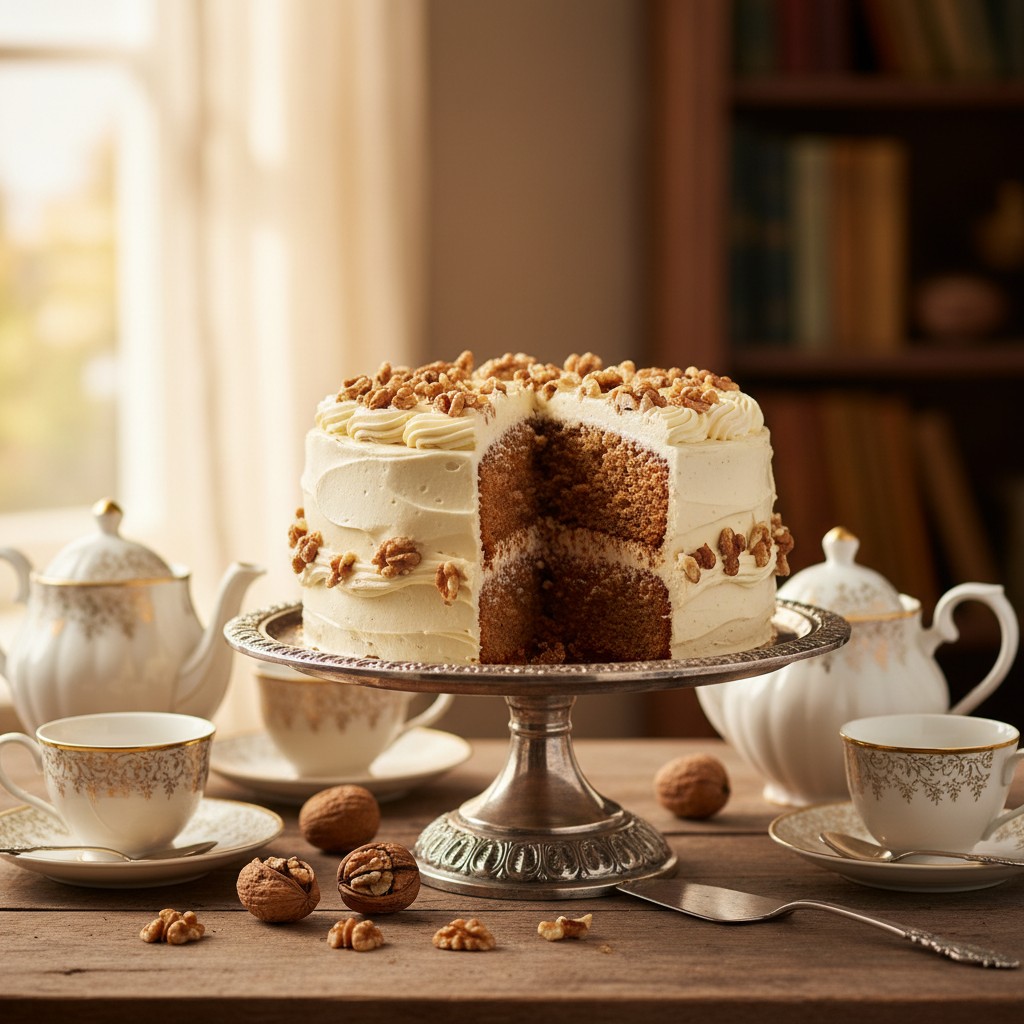
There's nothing quite like the comforting embrace of a classic Coffee and Walnut Cake, a truly timeless bake that brings joy to every teatime. This recipe promises a wonderfully moist sponge and a silky-smooth coffee buttercream, making it a sheer delight to share.
Why You'll Love This Recipe
- The 'all-in-one' method ensures a wonderfully moist and tender sponge with minimal effort.
- The perfect balance of rich coffee flavour and the delightful crunch of walnuts creates an irresistible texture and taste.
- It's a versatile classic, impressive enough for special occasions yet simple enough for an everyday treat, always bringing a smile.
Ingredients
- 225g (8oz) self-raising flour
- 1 tsp baking powder
- 225g (8oz) caster sugar
- 225g (8oz) soft butter or baking spread
- 4 large eggs
- 2 tbsp instant coffee, dissolved in 1 tbsp hot water (or 1 tsp coffee essence)
- 75g (3oz) walnuts, roughly chopped
- For the buttercream:
- 150g (5oz) soft butter
- 300g (11oz) icing sugar, sieved
- 1 tbsp instant coffee, dissolved in 1 tbsp hot water (or 1 tsp coffee essence)
- 1-2 tbsp milk (optional, for consistency)
- For decoration:
- A few whole walnut halves
Equipment Needed
2 x 20cm (8in) round sandwich tins • Baking parchment • Large mixing bowl • Electric mixer (or a good sturdy whisk) • Sieve • Spatula • Wire rack • Palette knife (optional, for spreading buttercream)

Step-by-Step Instructions
- Preheat your oven to 180°C (160°C fan/Gas Mark 4). Grease and line two 20cm (8in) round sandwich tins with baking parchment. This ensures your cakes release beautifully without sticking.
- For the sponge, place the self-raising flour, baking powder, caster sugar, soft butter, and eggs into a large mixing bowl. Add the dissolved coffee (or coffee essence).
- Beat all the ingredients together using an electric mixer for about 2-3 minutes, until the mixture is light, fluffy, and well combined. Be careful not to overmix; just until everything is incorporated.
- Gently fold in the roughly chopped walnuts using a spatula. This adds that lovely texture and flavour we adore.
- Divide the mixture evenly between the two prepared cake tins and smooth the tops. Pop them into the preheated oven and bake for 30-35 minutes, or until golden brown and a skewer inserted into the centre comes out clean. If you can hear a gentle sizzle, they're not quite ready!
- Once baked, leave the cakes to cool in their tins for 5-10 minutes before turning them out onto a wire rack to cool completely. Patience is key here, dear bakers!
- While the sponges are cooling, prepare the coffee buttercream. In a clean bowl, beat the soft butter until it's light and creamy. Gradually add the sieved icing sugar, beating well after each addition. This helps prevent a cloud of sugar dust!
- Stir in the dissolved coffee (or coffee essence). If the buttercream seems a little stiff, add a tablespoon or two of milk until you reach a wonderfully smooth and spreadable consistency.
- Once the cakes are completely cold, spread half of the buttercream over the top of one sponge. Carefully place the second sponge on top, then spread the remaining buttercream over the top. You can use a palette knife to create lovely swirls.
- Finally, decorate the top of the cake with the whole walnut halves. Arrange them artfully for that classic finish. Now, slice and enjoy your sheer perfection!
How to Store \u0026 Reheat
To keep your beautiful cake at its best, store it in an airtight container at room temperature. It will remain wonderfully fresh and delicious for 3-4 days. There's no need to refrigerate it, as this can sometimes dry out the sponge. If you wish to prepare ahead, the un-iced sponges can be wrapped tightly in cling film and frozen for up to 1 month. Thaw them completely at room temperature before icing. The fully iced cake can also be frozen, wrapped carefully, but it's often best enjoyed fresh or from a frozen un-iced state to maintain that perfect buttercream texture.
Mary's Secrets to Success
For this classic, a few small touches can make all the difference. Firstly, ensure all your ingredients, especially the butter and eggs, are at room temperature. This helps them combine beautifully for a wonderfully smooth and light batter. Secondly, don't be tempted to overmix the cake batter once the flour is added; just mix until everything is incorporated to keep the sponge tender. And finally, always allow your cakes to cool completely on a wire rack before you even think about adding that glorious buttercream. Patience here leads to sheer perfection! This is a wonderfully simple recipe, and with these little tips, you’re sure to create a real family favourite.
Frequently Asked Questions
Why did my cake sink in the middle?
Oh, that can be a little disheartening, can't it? A sinking cake is often due to opening the oven door too early, letting out the heat, or perhaps the cake wasn't quite cooked through. Make sure your oven temperature is accurate and resist the urge to peek before the recommended baking time. Also, ensure your baking powder isn't past its best!
Can I make this as a traybake instead of a layer cake?
Absolutely, dear! This recipe adapts beautifully to a traybake. Simply use a 23x30cm (9x12in) rectangular tin, grease and line it as usual. The baking time might need a slight adjustment, perhaps 30-40 minutes, so keep an eye on it and test with a skewer for a clean result. Then, you can simply spread the buttercream generously over the top.
How do I get my buttercream so smooth?
The secret to a beautifully smooth buttercream lies in using very soft butter – not melted, just truly soft at room temperature – and ensuring your icing sugar is thoroughly sieved. Beat the butter well on its own first, until it's light and pale, then add the sieved icing sugar gradually. If it's still a little stiff, a tablespoon or two of milk will bring it to that perfect, spreadable consistency. Beat it for a good few minutes to incorporate air and make it wonderfully light.
Can I freeze this cake?
Yes, you certainly can! For the best results, I recommend freezing the un-iced sponges. Wrap them tightly in cling film once they are completely cool. They'll keep wonderfully in the freezer for up to a month. When you're ready to enjoy, simply thaw them at room temperature for a few hours before making your fresh buttercream and assembling. The iced cake can also be frozen, but do wrap it very carefully to protect the buttercream.
What if I don't have self-raising flour?
Not to worry at all! You can easily make your own. For every 225g (8oz) of plain (all-purpose) flour, simply add 2 level teaspoons of baking powder. Sieve them together thoroughly to ensure they are well combined, and then proceed with the recipe as normal. It works a treat!